Introduction
Have you ever wondered how electrical devices safely use power from high-voltage sources? A step down transformer is the key to making that possible.
In this article, we will explore why step down transformers are crucial in power systems, how they help reduce voltage, and their role in various industries. We’ll also discuss how DC to DC converters enhance voltage regulation in these systems.
Understanding the Functionality of a Step Down Transformer
Basic Principles of Operation
A step down transformer is essential for reducing high-voltage AC power to safer, usable levels for household, industrial, and commercial use. The transformer operates on the principle of electromagnetic induction, discovered by Michael Faraday. This process involves the primary coil generating a fluctuating magnetic field when alternating current (AC) flows through it, which induces a voltage in the secondary coil.
The key components of a step down transformer are:
● Primary winding: Connected to the high-voltage source.
● Secondary winding: Delivers the reduced voltage.
● Core material: Typically laminated silicon steel, it focuses the magnetic flux and reduces energy losses.
The turns ratio, the ratio of turns in the primary coil to those in the secondary, determines the level of voltage reduction. If the primary coil has more turns, the voltage is reduced while current increases, ensuring that power remains consistent (minus minor losses).
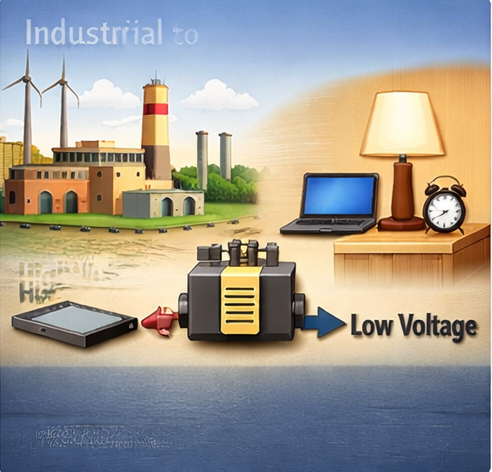
The Role of DC to DC Converters in Voltage Regulation
While step down transformers are effective for reducing AC voltage, their role can be enhanced when used with DC to DC converters in certain applications. These converters offer precise control over DC voltage, making them ideal for systems with DC power sources.
In many industrial applications, DC to DC converters complement step down transformers by providing further voltage regulation. For example, a step down transformer might reduce AC voltage to a lower level, and the DC to DC converter will then fine-tune the voltage for specific DC-powered devices or systems. This combination ensures optimal energy conversion, reduces the risk of voltage fluctuations, and enhances overall system reliability.
By combining both technologies, industries benefit from:
● Efficient power conversion with precise voltage regulation.
● Reduced risk of equipment damage from power surges.
● Improved overall system reliability, especially in sensitive environments like electric vehicles, telecommunication systems, and renewable energy setups.
Why Do You Need a Step Down Transformer in Power Systems?
Voltage Reduction for Safe and Efficient Power Distribution
A step down transformer plays an essential role in reducing high-voltage electricity from power stations to safe levels suitable for use in homes, businesses, and industrial systems. The need for voltage reduction arises from the fact that high-voltage electricity is required for efficient long-distance transmission but is too dangerous for everyday applications. Without step down transformers, electrical systems would be vulnerable to damage or even safety risks due to high voltage.
Key Points:
● High-voltage transmission reduces energy loss over long distances.
● Step down transformers convert high voltage (e.g., 400kV) to lower, usable voltages (120V, 240V) for homes and businesses.
● These transformers ensure electricity is safely distributed and compatible with devices, ensuring consumer safety.
Case Study: Residential Power Grid Distribution In a typical residential power distribution system:
1. Electricity is transmitted at voltages as high as 400kV from power plants.
2. At substations, step down transformers reduce the voltage to levels suitable for homes, typically 120V or 240V.
3. Lower voltage is safe for household appliances, lighting, and heating systems.
Without this transformation, appliances could be damaged, and safety hazards would rise. Step down transformers, therefore, serve as the safety bridge between high-power transmission lines and end-user applications.
The Importance of Voltage Control in Industrial Settings
In industrial applications, the need for precise voltage regulation is paramount. Step down transformers provide an essential function in reducing high-voltage electricity to the correct levels needed for machinery and equipment. High voltage is typically used for grid transmission, but industrial machinery requires much lower, specific voltage levels to prevent damage.
Industrial Applications:
● Heavy machinery: Motors and automated systems require consistent, lower voltage to function optimally.
● Manufacturing processes: Certain industrial processes, such as welding, require precise voltage control to avoid malfunction or overheating.
● Safety: Step down transformers help prevent the risks associated with overvoltage, such as equipment burnout, fires, and safety accidents.
For example, a factory may receive high-voltage power from the grid but needs that voltage reduced to avoid damaging sensitive equipment like control systems, automated machinery, and electronic sensors. Step down transformers handle this by converting high-voltage power into safer, usable levels for industrial operations, ensuring smooth production without risks of equipment failure.
DC to DC Converter Applications in Industrial Voltage Control
In many industrial setups, DC to DC converters complement step down transformers for further voltage regulation, especially in systems where DC power is involved. While step down transformers are excellent for AC voltage regulation, DC to DC converters allow for precise control over DC voltage output, making them ideal for applications where the transformer’s reduced voltage still needs fine-tuning.
How DC to DC Converters Work with Step Down Transformers:
● Electric vehicles (EVs): The high-voltage DC from EV batteries is first reduced by a step down transformer. Then, DC to DC converters fine-tune the voltage to supply different components such as the motor, lighting, and other electronic systems.
● Telecommunications: Power systems in telecommunications equipment often require different voltage levels. After a step down transformer reduces the input AC voltage, DC to DC converters ensure precise regulation to power sensitive devices without risking damage.
● Renewable energy: In solar and wind energy systems, power is generated at varying voltages. Step down transformers first reduce this voltage, and DC to DC converters further optimize it to match the exact requirements of the storage or grid system.
Comparison of Step Down Transformers and DC to DC Converters:
Component | Step Down Transformer | DC to DC Converter |
Primary Function | Reduces AC voltage to a lower, safe level | Regulates and converts DC voltage to specific levels |
Power Type | AC power (high-voltage to low-voltage) | DC power (adjusting voltage levels for specific needs) |
Industrial Use | Heavy machinery, residential distribution | Electronics, batteries, renewable energy systems |
Applications of Step Down Transformers
Residential Power Systems and Consumer Electronics
Step down transformers are crucial in ensuring that power distributed from the grid is safe for residential use and consumer electronics. Electrical systems transmit high-voltage electricity for efficient long-distance transmission, but this voltage must be reduced to safe levels before it enters homes or electronic devices.
Step down transformers reduce high-voltage electricity (e.g., 400kV) to the standard household voltages, typically 120V or 240V. This conversion is essential for powering everyday household appliances such as refrigerators, air conditioners, and lighting systems, which require lower voltages for safe operation.
Examples of Devices Using Step Down Transformers:
● Phone Chargers: Mobile phone chargers convert high-voltage AC power from the grid into low-voltage DC, making use of step down transformers for safe and efficient charging.
● LED Lights: LEDs require low, regulated voltage, and step down transformers are used in LED drivers to provide this stable power.
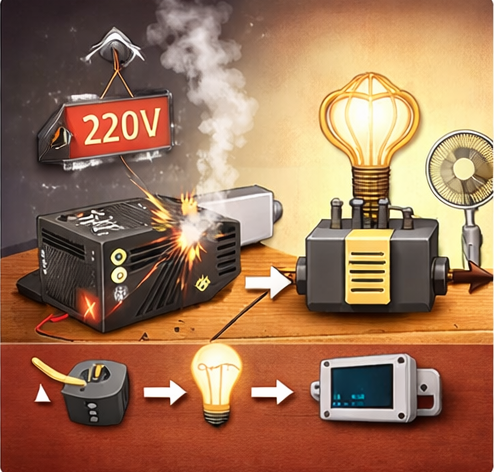
By converting high voltage to safe levels, step down transformers protect both users and devices from electrical hazards, ensuring efficient and safe power distribution.
Specialized Applications in Healthcare and Renewables
Step down transformers are also vital in sectors like healthcare and renewable energy, where precise power control is crucial. In medical equipment, such as MRI machines, CT scanners, and other sensitive diagnostic tools, accurate voltage levels are essential to prevent equipment malfunction or injury to patients.
For example, MRI machines require highly regulated power supplies to ensure the machine operates at its optimal settings. Step down transformers reduce the incoming high-voltage AC power from the grid to the exact voltage levels needed for these devices to function. This ensures that the equipment is powered consistently and safely, avoiding fluctuations that could lead to damage.
In renewable energy systems, such as solar and wind farms, step down transformers play a key role in voltage regulation. These systems often generate power at varying levels, which must be reduced to safe, stable voltages before being sent to the grid or used to charge storage batteries. Additionally, DC to DC converters are integrated into these systems to ensure that the DC power generated from renewable sources is accurately regulated for storage or use in appliances that require specific voltage levels.
Role in Commercial and Industrial Facilities
Step down transformers are crucial in commercial and industrial settings, where large-scale power distribution systems are required. In factories, data centers, and large commercial buildings, high-voltage electricity from the grid is stepped down to levels appropriate for industrial machinery and equipment.
Power Distribution in Industrial Facilities:
● Large motors, HVAC systems, and industrial control systems typically require stable, lower voltage for optimal performance.
● Data centers rely on step down transformers to ensure that sensitive equipment, such as servers and networking devices, receive clean, regulated power to avoid damage.
Benefits of Using Step Down Transformers
Enhancing Energy Efficiency
One of the primary benefits of step down transformers is their ability to reduce energy losses during the voltage conversion process. High-voltage transmission systems are designed to minimize losses over long distances, but once the power reaches the local substations, it needs to be reduced to a level that is usable for residential, commercial, or industrial use.
Step down transformers reduce the electrical energy lost during this conversion, making power distribution more efficient. They help to minimize the heat generated during the transformation of electricity, ensuring that more energy is delivered to the end user rather than wasted. This energy efficiency not only reduces costs for consumers but also enhances the overall sustainability of power systems.
Increased Safety and Device Protection
Step down transformers also play a critical role in protecting sensitive equipment from electrical damage. Without a transformer to reduce voltage, high-voltage power would flow directly into electrical devices, risking significant damage. The protection offered by step down transformers ensures that voltage is reduced to levels where equipment and electrical systems can function without harm.
Step down transformers also provide surge protection, mitigating risks such as voltage spikes that can occur during storms or electrical faults. This is particularly important in environments where electrical devices and machinery are crucial to operations, such as in hospitals, manufacturing facilities, or data centers.
How to Choose the Right Step Down Transformer for Your Needs
Factors to Consider in Sizing and Voltage Requirements
Selecting the right step down transformer involves understanding both the voltage requirements and load needs of the specific application. A key factor is the turns ratio, which determines the voltage reduction. The ratio between the number of turns in the primary and secondary windings of the transformer directly influences the output voltage. It is crucial to match the transformer's voltage reduction ratio to the required voltage for the equipment or system it is powering.
When choosing a step down transformer, you should also consider:
● Input Voltage: The voltage that the transformer will receive, typically from the grid or another power source.
● Output Voltage: The voltage required by the device or system being powered, which the transformer will deliver.
● Load Rating: The transformer's ability to handle the required current and power. It's important to ensure that the transformer can handle the maximum load expected without overheating or becoming inefficient.
By ensuring that the transformer is correctly sized to meet both the voltage and load requirements, you can maximize efficiency, prevent equipment damage, and ensure reliable operation.
Comparison with DC to DC Converters in Specific Scenarios
In some cases, it might be more appropriate to use a DC to DC converter instead of a traditional step down transformer. While step down transformers are designed to reduce AC voltage levels, DC to DC converters are used when there is a need for precise control of DC voltage. The main difference is that DC to DC converters can directly regulate DC power, making them ideal for systems with DC input and output needs.
When to Use a DC to DC Converter:
● Battery-powered devices: For systems running on batteries (such as electric vehicles), DC to DC converters help manage the power flow from the battery pack to various components, offering precise voltage regulation for each system component.
● Telecommunications: In telecommunication systems, where equipment often requires a stable DC voltage, DC to DC converters ensure that the voltage is accurately adjusted, providing higher efficiency and reliability.
● Renewable Energy Systems: In solar or wind energy systems, DC to DC converters regulate the power generated by solar panels or wind turbines to match the required voltage levels for storage or grid integration.
When to Use a Step Down Transformer:
● AC power systems: When the power source is AC, step down transformers are ideal for reducing voltage levels for household, commercial, or industrial use.
● High power distribution: In industrial or utility-scale applications where large amounts of AC power need to be reduced to lower voltages for equipment or system use, step down transformers are more efficient and cost-effective.
Conclusion
Step down transformers are essential for safely reducing voltage levels in power systems. They play a critical role in energy distribution across various industries. By integrating DC to DC converters with step down transformers, systems can achieve more precise voltage regulation. This combination enhances efficiency and stability, especially in sensitive applications like renewable energy and electric vehicles. At Zhejiang Ximeng Electronic Technology Co., Ltd., our transformers and voltage regulation products offer unique advantages, ensuring reliable and safe power management for industrial and commercial applications.
FAQ
Q: What is the role of a step down transformer in industrial applications?
A: A step down transformer reduces high-voltage electricity to safer, lower levels suitable for industrial equipment. It ensures efficient power distribution while preventing damage to sensitive machinery.
Q: When should a DC to DC convertor be used instead of a step down transformer?
A: DC to DC converters are used when precise DC voltage regulation is needed, especially in battery-powered systems like electric vehicles. Step down transformers are better for AC to AC voltage reduction, while converters are ideal for DC applications.
Q: How do DC to DC converters and step down transformers work together?
A: DC to DC converters complement step down transformers by fine-tuning DC voltage after a transformer reduces AC voltage. This combination ensures stable, efficient power delivery in systems requiring specific voltage levels.
Q: What are the cost considerations when choosing between DC to DC converters and step down transformers?
A: DC to DC converters generally cost more due to their precise voltage regulation, whereas step down transformers are more cost-effective for bulk AC voltage reduction. The choice depends on the application’s voltage requirements and operational needs.
Q: What maintenance is required for step down transformers and DC to DC converters?
A: Step down transformers require periodic inspections to ensure no overheating or wear, especially on the windings. DC to DC converters require less maintenance but should be checked for efficiency and proper voltage regulation. Both are critical for reliable operations.