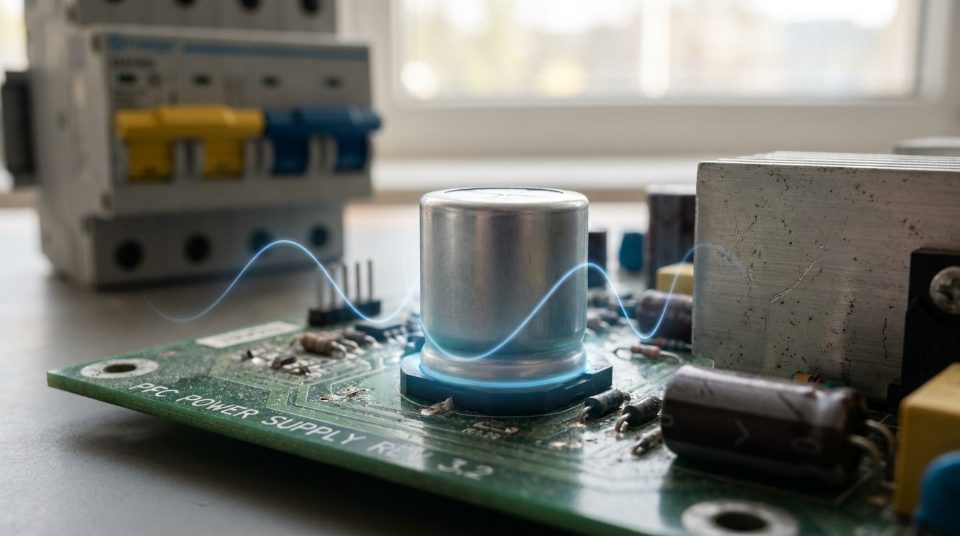
Have you ever wondered why some electronic systems run hot, waste energy, or cause weird interference on your electrical grid? The culprit is often a traditional switch-mode power supply. These units draw electrical current in short, high-amplitude pulses rather than a smooth flow. This uneven drawing pattern causes serious electrical inefficiency and sends harmonic distortion back into your AC power line, which can disrupt nearby equipment.
To solve this, active Power Factor Correction (PFC) acts as a front-end pre-regulator. It actively reshapes and aligns your input current waveform with the mains voltage waveform. This technology is vital in sensitive fields, as shown by the engineering standards of the PFC Power Supply 500W To 1000W High Power Factor Correction For Telecom And Medical.
Choosing a modern power factor correction power supply does more than just clean up your power lines. In this article, we will explore seven critical operational, economic, and regulatory benefits of integrating a PFC power supply into your systems.
Understanding the Mechanics of a Power Factor Correction Power Supply
To understand how a power factor correction power supply works, you first need to look at how electricity behaves when it enters your equipment. Under the hood, these systems use clever electronics to make sure no energy goes to waste.
Defining the Power Factor Ratio
To understand how a power factor correction power supply optimizes your system, you need to look at a simple ratio. Power factor correction defines the ratio of real power transferred to the output terminals versus the total apparent power drawn from the input AC source. Think of real power, measured in watts, as the actual energy doing useful work to run your electronic components. Apparent power, measured in volt-amperes, is the total power the supply draws from your wall outlet.
When a system has no correction, it is highly inefficient. A typical non-corrected power supply may have a power factor of 0.5 to 0.6. This means nearly half of the electricity drawn from the grid is wasted as reactive power, which does no useful work but still heats up your wires and strains the electrical infrastructure.
By contrast, an active PFC circuit actively shapes the current to match the voltage, driving this ratio close to an ideal 0.99. For instance, heavy-duty hardware like the RSP 2000 2000W Single Output Switching Power Supply with PFC 24V 150V Adjustable 91 Efficiency Industrial Grade demonstrates how active correction keeps power draw highly efficient, ensuring that almost every watt pulled from your electrical grid goes directly into powering your equipment.
The Constant Power Draw Mechanism
To keep your electronic devices running smoothly, your power supply has to maintain a steady, constant output voltage. Because the load requires this stable voltage, the supply must attempt to draw a constant amount of power from its input source. In a standard system without correction, this constant demand causes the supply to grab energy in quick, harsh spikes whenever the AC voltage peaks.
This is where active PFC steps in to change the game. Instead of letting these spikes disrupt your system, the active PFC circuit continuously monitors the incoming AC voltage waveform in real-time. It then actively shapes the input current waveform to mirror the voltage. According to technical resources on AC DC Power Supply p design, this continuous adjustment prevents the system from drawing current in sudden, violent gulps.
By aligning the current and voltage, you get smooth and constant power delivery without those damaging spikes. This is a core reason why implementing a power factor correction power supply is so beneficial for keeping your entire electrical setup stable and efficient.
Direct Financial and Efficiency Benefits of Active PFC
How does active PFC actually save you money and improve your system’s day-to-day operation? In short, it stops you from paying for electricity you cannot use, slashes your utility bills, and keeps your equipment running much cooler.
Maximizing Useful Power
When you run a device without correction, a large portion of the electricity drawn from the wall is wasted as reactive power. This energy sloshes back and forth in the power lines without doing any actual work. Active PFC solves this by aligning voltage and current so that nearly 100% of the electricity drawn from the grid is converted into useful, real power. By minimizing this reactive waste, your system achieves maximum electrical efficiency.
Avoiding Utility Penalties
For homeowners, power bills are usually based only on the real power consumed. However, for industrial operations and large businesses, utility companies monitor your power factor closely. Because low power factor forces utilities to install larger cables and transformers to deliver the same amount of usable power, they penalize commercial customers who fall below a certain threshold (usually 0.90). Integrating a power factor correction power supply into your setup ensures your power factor stays near 0.99, helping you completely avoid these expensive utility surcharges.
Reducing Heat and Cooling Costs
Wasted electrical current does not just disappear—it turns into heat inside your power supply. Higher thermal dissipation means your system runs hotter, which degrades internal components. In dense environments like server closets or data centers, this extra heat adds up quickly, forcing your HVAC systems to work overtime. By lowering internal heat generation, active PFC reduces your overall cooling requirements and lowers your facility's cooling bills. While active PFC components do add a small upfront cost to your hardware, the long-term energy savings and reduced cooling demands easily make up for the investment.
Key Takeaways
Benefit 1: Maximized electrical efficiency by reducing reactive power waste, ensuring that nearly all electricity drawn from the grid does useful work.
Benefit 2: Substantial reduction in utility costs, particularly for industrial operations where utility companies penalize consumers for low power factor.
Benefit 3: Lowered thermal dissipation within the power supply unit, reducing cooling requirements and lowering HVAC energy consumption in dense environments like data centers.
Enhanced System Reliability and Electrical Longevity
How does upgrading your power supply actually keep your entire system running longer and prevent unexpected crashes? Beyond saving money on your utility bills, using a power factor correction power supply directly protects your hardware from electrical stress and overheating. By cleaning up the way power is drawn, it solves three major reliability issues that plague standard electrical setups.
Reducing Electrical Noise with Lower THD
Traditional power supplies draw current in quick, violent gulps rather than a smooth flow. This choppy demand distorts the AC voltage waveform on your local power lines, creating a phenomenon called Total Harmonic Distortion (THD). This distortion acts as high-frequency electrical noise that travels back into your shared electrical grid. If you have sensitive equipment nearby—such as medical monitors, lab instruments, or audio gear—this noise can cause screen flicker, data errors, or outright system glitches. Active PFC shapes the incoming current into a clean, smooth sine wave that matches the voltage, keeping THD extremely low and protecting neighboring devices from interference.
Extending the Life of Internal Components
Heat is the ultimate silent killer of electronics, particularly for electrolytic capacitors. These capacitors rely on a liquid or gel electrolyte to store energy, and high internal operating temperatures cause this liquid to dry out over time. If a capacitor degrades, the power supply fails. Because active PFC reduces internal power losses, the unit generates significantly less heat. A cooler interior directly preserves these sensitive capacitors, extending the overall lifespan of your equipment and saving you from premature hardware replacements.
Maximizing Your Circuit Breaker Capacity
Have you ever tripped a circuit breaker simply by plugging in one too many devices? Circuit breakers monitor the total current flowing through them, not just the real power your devices use. Because non-corrected power supplies draw high peak currents to compensate for their low power factor, they consume a disproportionate amount of your circuit's capacity. Active PFC lowers the overall current draw for the exact same power output. This means you can safely run more devices on a single branch circuit without worrying about unexpected shutdowns or overloaded breakers.
Key Takeaways
Benefit 4: Minimization of Total Harmonic Distortion (THD), which prevents electrical noise from disrupting sensitive neighboring electronics on the same circuit.
Benefit 5: Extended component lifespan because reduced internal operating temperatures prevent premature degradation of critical electrolytic capacitors.
Benefit 6: Increased branch circuit capacity, allowing more devices to safely run on the same circuit breaker without triggering overcurrent trips.
Meeting Global Compliance Standards with a Power Factor Correction Power Supply
If you plan to sell your electronic products globally, you will quickly run into strict utility regulations. How do you ensure your product does not get blocked at customs or rejected by international clients? The answer lies in meeting global electromagnetic compatibility (EMC) standards, and using a power factor correction power supply is the easiest way to guarantee compliance.
Let us look at the legal side first. In regions like the European Union, any mains-powered equipment drawing more than 75 Watts of active power must comply with the EN61000-3-2 standard. This regulation strictly limits the harmonic currents your device can inject back into the public power grid. Without active PFC, standard switch-mode power supplies draw current in short, dirty spikes, which easily breach these limits. Incorporating PFC technology keeps these harmonics well within the legal thresholds, giving you a hassle-free pass to global markets.
Beyond legal compliance, this technology simplifies your entire product distribution and inventory management. Active PFC front-ends naturally act as universal input stage regulators, allowing your device to run efficiently on any regional grid—whether it is 110V in North America or 230V in Europe. Instead of designing, stocking, and certifying multiple power supply variations for different countries, you can use a single, universally compliant design. This reduction in engineering overhead and stock-keeping unit (SKU) complexity saves massive amounts of time and money.
Finally, this setup protects the very grid your equipment plugs into. In commercial buildings with three-phase power distribution, non-linear loads cause harmonic currents to add up in the neutral wire rather than canceling out. This can cause the neutral wire to overheat and fail. By smoothing out the current draw, PFC prevents these dangerous neutral wire current overloads. It also stops localized voltage sags—those sudden drops in voltage that happen when heavy, uncorrected loads turn on—keeping the local power grid stable for everyone.
Key Takeaways
Benefit 7: Guaranteed compliance with international regulatory standards, such as EN61000-3-2, which strictly limits harmonic currents for equipment drawing more than 75W.
Simplification of global product distribution by utilizing a single, universally compliant power supply design that functions efficiently on any regional grid.
Protection of local grid infrastructure by preventing localized voltage sags and reducing the neutral wire current overhead in three-phase distribution systems.
Conclusion
If you are wondering whether upgrading your systems is worth the effort, the answer depends on your power requirements and where you plan to deploy your hardware. For any system drawing more than 75 watts, or for equipment running in commercial facilities, integrating a power factor correction power supply is no longer just an optional upgrade—it is a design necessity. It serves as a vital tool for optimizing your energy footprint, keeping your hardware running reliably for years, and opening doors to strict international markets.
Naturally, choosing active PFC over uncorrected or passive designs involves a trade-off: a slightly higher upfront cost. Active PFC circuits require control chips, inductors, and extra components that add a small premium to your initial bill of materials or procurement budget. However, this initial expense is quickly offset by long-term operational savings. By eliminating reactive power waste, you avoid hefty utility penalties and drastically reduce thermal stress inside the unit. Cooler operation means your internal components last longer, saving you from expensive field maintenance and premature equipment replacements.
To determine how to apply these power factor correction power supply strategies to your own systems, follow these practical steps:
Check Your Power Draw: If your device operates above 75W, compliance standards like EN61000-3-2 make harmonic limits mandatory for global sales. Active PFC is the easiest way to clear this hurdle.
Assess Your Operating Environment: For medical clinics, dense IT data centers, or industrial plants, the reduced heat output and lower harmonic distortion of active PFC are critical for protecting sensitive neighboring equipment.
Calculate the Lifespan ROI: Compare the slightly higher cost of a PFC-equipped unit against potential utility fines, system downtime, and the energy cost of cooling your system. In high-duty-cycle applications, active PFC pays for itself rapidly.
Transitioning to active PFC technology is a straightforward but essential step for any modern industrial, medical, or IT infrastructure aiming for long-term sustainability, grid stability, and reliable performance.
FAQ
What is the main difference between active and passive PFC? Passive PFC uses heavy, simple components like inductors to smooth out current, reaching a power factor of only 0.7 to 0.8. Active PFC uses an electronic control circuit to actively shape the current waveform, driving the factor to a near-perfect 0.99. For modern designs over 75W that require lightweight components and global compliance, active PFC is the industry standard.
Why is power factor correction especially critical in medical environments? Medical devices operate alongside highly sensitive monitoring tools that can easily fail due to electromagnetic interference. High harmonic distortion from uncorrected units can distort sensor readouts or disrupt life-support systems on the same electrical circuit. Using a power factor correction power supply keeps the electrical environment clean, ensuring your critical medical devices comply with strict safety standards.
Does a power factor of 0.99 mean the unit is 99% efficient? Not quite, as power factor and conversion efficiency are actually two different metrics. Power factor measures how cleanly the device draws energy from the AC wall outlet, while efficiency measures how much of that power is successfully converted to DC output. A unit can have a near-perfect power factor of 0.99 but still lose 10% to 15% of its energy as heat.