
- All
- Product Name
- Product Keyword
- Product Model
- Product Summary
- Product Description
- Multi Field Search

Views: 0 Author: Site Editor Publish Time: 2026-09-30 Origin: Site


Sourcing specialized electronic components requires careful planning and a deep understanding of market dynamics. You must balance capital efficiency against supply chain resilience. A 200W PFC power supply sits at the heart of many mission-critical systems. Component shortages and fluctuating global transit times make standard procurement models highly risky. Customized engineering requirements further complicate your timeline. When supply chains break, OEM production lines grind to an expensive halt. We want to prevent these costly delays from impacting your operations.
This guide provides procurement and engineering teams a verifiable methodology to optimize inventory. You will learn how to calculate accurate manufacturing lead times step-by-step. We will show you how to negotiate Minimum Order Quantities (MOQ) effectively. You will also discover practical strategies to vet suppliers for consistent production availability.
Delays in power supply procurement directly pause OEM production lines. Every day your factory floor waits for parts translates to lost revenue. You cannot ship incomplete medical devices or telecom equipment. Conversely, over-ordering ties up essential capital. Excess inventory sits in warehouses collecting dust and accruing holding fees. You also risk component obsolescence if engineering updates the product design before you use the stored inventory.
Active Power Factor Correction (PFC) units present unique sourcing challenges. These modules require specific integrated circuits (ICs) and specialized magnetic components. The semiconductor market experiences frequent volatility. Lead times for these precise components stretch during global chip shortages. Standard power supplies might use generic parts, but active PFC modules demand precision engineering. You cannot easily swap a critical PFC controller without re-certifying the entire device.
Your procurement success relies on achieving a balanced cost structure. You must optimize the unit price against shipping expenses and warehouse holding costs. A cheaper unit price means nothing if ocean freight delays cause a production stock-out. True success requires mitigating acceptable lead time risks while maintaining steady inventory flow. Procurement teams must view this as a dynamic balancing act.
The exact technical requirements of your power unit drastically shift your procurement schedule. Off-the-shelf standard units offer nearly immediate availability. Factories produce them in massive volumes and store them globally. If your design accepts a standard model, you bypass most manufacturing delays. Minor modifications, however, introduce friction. Adding custom wire harnesses or specific connector types typically adds two to four weeks. The factory must halt standard runs to accommodate these changes. Fully custom layouts demand heavy engineering involvement. If you require a unique form factor, lead times routinely push beyond 16 weeks.
High-efficiency targets complicate the timeline even further. Sourcing a 200w high efficiency pfc power supply necessitates premium internal parts. You will need low-loss components like specialized MOSFETs and high-end capacitors. These premium parts rarely sit in bulk stock. Component manufacturers build them to order. Historically, these specific parts carry significantly longer procurement times. You must factor this component-level delay into your macro production schedule.
Testing and validation phases also consume substantial time. Rigorous engineering specifications require built-in factory testing periods. Extended hold-up times, thermal cycling, and EMI/EMC compliance checks are mandatory. Factories conduct burn-in testing to weed out early infant mortality failures. You cannot expedite this phase. Skipping or shortening the burn-in period invites severe quality risks. A failed unit in the field costs exponentially more than a few days of factory testing.
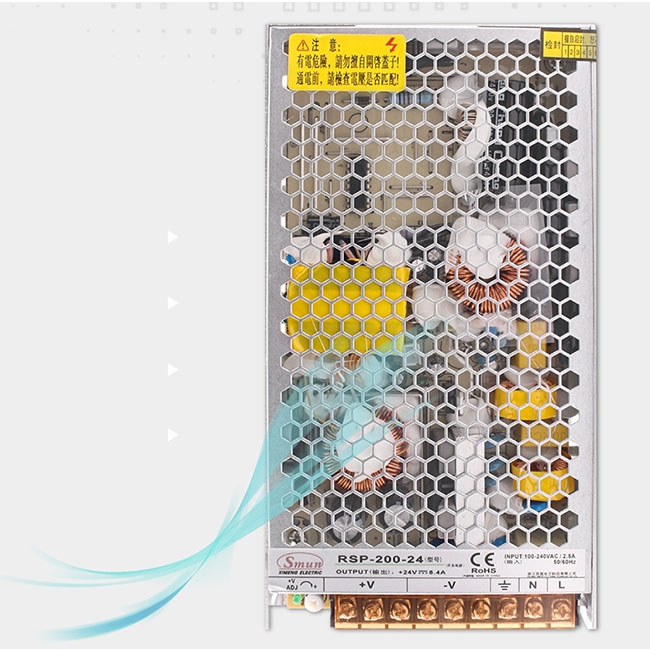
You must break down the real timeline to set internal stakeholder expectations transparently. Sales and marketing teams often underestimate hardware production cycles. A clear evaluation dimension prevents miscommunication. Manufacturing lead time encompasses much more than just factory floor assembly. You must track four distinct phases to calculate an accurate delivery date.
This initial phase covers the paperwork and digital setup. Order processing takes time across international time zones. Engineering teams must review and approve CAD files or Gerber files. If your design requires custom enclosures, the factory must set up custom tooling. Tooling creation involves physical metalwork or plastic injection molds. This phase alone can take one to three weeks before any actual components are ordered.
Bill of Materials (BOM) sourcing dictates your actual project start date. The factory cannot build the unit until every part arrives. Critical components like custom transformers and specific PFC controllers have unpredictable lead times. You must assume the longest component lead time controls the entire schedule. If a specific IC takes ten weeks to arrive, your assembly phase cannot begin until week eleven.
Once all parts sit on the factory floor, physical production begins. Surface Mount Technology (SMT) machines place the tiny resistors and chips. Workers then manage the through-hole assembly for larger components like bulk capacitors. Conformal coating applications follow to protect against moisture. Finally, the units undergo mandatory Quality Assurance (QA) and burn-in testing. This phase usually takes two to four weeks, depending on order volume and factory capacity.
Finished goods still need to reach your facility. You must differentiate between transit methods. Air freight offers fast delivery but carries a premium cost. It works well for urgent, low-volume orders. Ocean freight reduces shipping costs significantly but moves slowly. Ships face port congestion, weather delays, and customs inspections. Always buffer your timeline for unexpected customs holds.
High Minimum Order Quantities (MOQs) lower your per-unit cost. Factories offer steep discounts for volume production. However, massive orders increase your inventory risk and tie up cash. Low MOQs preserve your immediate cash flow but drive up the individual unit cost. You must implement specific procurement strategies to mitigate these opposing risks.
You can commit to an annual MOQ while negotiating staggered deliveries. For example, you agree to buy 5,000 units over twelve months. You negotiate monthly or quarterly shipping releases. This strategy secures bulk pricing for your company. It also guarantees factory component allocation. You reduce warehouse overhead because you only store what you need for the current quarter.
Consider partnering with suppliers who offer VMI programs. Under this model, the supplier holds buffer stock locally or stateside. They absorb the warehouse costs and manage the replenishment cycle based on your usage data. This absorbs sudden demand spikes perfectly. If your sales team lands an unexpectedly large contract, the local buffer stock covers the immediate need while the factory ramps up production.
Sometimes you only need to secure the hardest-to-find parts. You can pay the supplier upfront to purchase and hold the long-lead-time ICs. The factory stores these specific components securely. When demand arises, they pull from this component stock for rapid assembly. This drastically cuts down Phase 2 of the lead time framework. You avoid buying thousands of finished units, yet you guarantee quick production turnaround.
| Strategy Type | Primary Benefit | Ideal Scenario | Cost Implication |
|---|---|---|---|
| Blanket Orders | Locks in volume discount pricing | Predictable, steady production schedules | Lowers unit cost, spreads out payments |
| Vendor Managed Inventory | Provides immediate local stock availability | Highly variable or seasonal demand spikes | Shifts holding costs to the supplier |
| Component Stocking | Drastically reduces manufacturing lead time | Custom designs relying on volatile ICs | Requires upfront capital for raw materials only |
Moving beyond basic unit pricing is vital for long-term stability. You must assess the overall supply chain maturity of your potential partners. A cheap quote often hides fragile procurement practices. Evaluating a supplier requires a structured approach across three main criteria.
You must know exactly what goes into your product. Ask if they provide multiple approved vendor options for critical components. This is known as second-sourcing. A mature supplier designs circuits capable of using ICs from Texas Instruments, Infineon, or STMicroelectronics interchangeably. Second-sourcing prevents single-point-of-failure delays. If one chip manufacturer halts production, your supplier simply pivots to the approved alternative without pausing your order.
Assess their physical manufacturing capabilities. How many SMT lines do they operate? Ask about their peak season utilization rates. A factory running at 99% capacity cannot absorb your sudden order increases. They must demonstrate the ability to scale up production without sacrificing QA standards. Rushed assembly lines lead to poor soldering and failed burn-in tests. You need a partner who can grow alongside your business demands.
Ensure the supplier possesses the financial health to execute long-term blanket orders. A financially unstable factory might use your upfront deposit to pay off older debts. Furthermore, verify their compliance track record. They must hold verifiable UL, CE, and FCC certifications. Forged or expired safety certificates will trigger massive customs delays. Regulatory bodies confiscate non-compliant electronics at the border. Always request PDF copies of their latest safety certifications before signing a contract.
Optimizing your procurement strategy requires constant negotiation. Engineering pushes for exact specifications, procurement fights for lower costs, and suppliers face harsh production realities. You must balance these three forces to maintain a resilient supply chain. Standardizing parts, understanding true manufacturing timelines, and leveraging creative MOQ structures will protect your production schedules.
Your next steps should focus on immediate risk assessment. Audit your current suppliers to verify their second-sourcing policies. If you are developing a new product, request a sample unit early. Demand a comprehensive BOM analysis for your specific requirements. Proactive planning today guarantees your factory lines keep running tomorrow.
A: A standard unit usually requires an 8 to 12-week manufacturing lead time. This average accounts for standard raw material procurement and factory assembly. However, this timeline fluctuates based on global semiconductor availability. Transit methods also impact the final delivery. Ocean freight will add several weeks compared to expedited air freight.
A: A standard PFC power supply simply converts AC to DC efficiently. A ups power supply requires integrated battery management and specialized failover circuitry. While engineers can customize a 200W unit to include battery backup functions, doing so significantly increases both the lead time and the required MOQ.
A: Extending a unit's hold-up time requires installing much larger bulk capacitors. These high-capacity components often experience longer procurement times in the supply chain. Additionally, larger capacitors alter the physical footprint of the unit, potentially forcing a custom enclosure design that further extends your tooling lead time.
A: High MOQs offset the expensive initial setup costs. Factories face significant SMT machine changeover times when switching from standard to custom boards. Additionally, electronic component distributors sell specialized ICs in strict minimum reel sizes. The factory must purchase the entire reel, passing that volume commitment onto your order.