Introduction
Have you ever wondered how devices like smartphones and solar panels maintain stable power? The secret lies in the DC to DC converter. This crucial component ensures that electronic systems receive the right amount of voltage.
In this article, we'll explore how DC to DC converters work, their types, and their essential role in devices like electric vehicles and renewable energy systems. You will learn how these converters help optimize power management in various industries.
Understanding the Basics of DC to DC Conversion
What is DC Voltage?
Direct Current (DC) refers to the flow of electric charge in a single direction, unlike alternating current (AC), which oscillates back and forth. DC voltage is consistent, which is why it is commonly used in battery-powered systems and electronic devices that require stable power input.
DC voltage plays a central role in power conversion systems because most modern devices, including industrial machinery and medical equipment, depend on regulated voltage. The DC to DC converter steps in by adjusting the voltage to match the exact needs of each device, optimizing efficiency and power usage.
In industries like industrial automation and medical devices, precision voltage regulation is vital. Smunchina, for example, supplies highly efficient DC-DC converters for these industries, ensuring that each device gets the right amount of power for optimal performance.
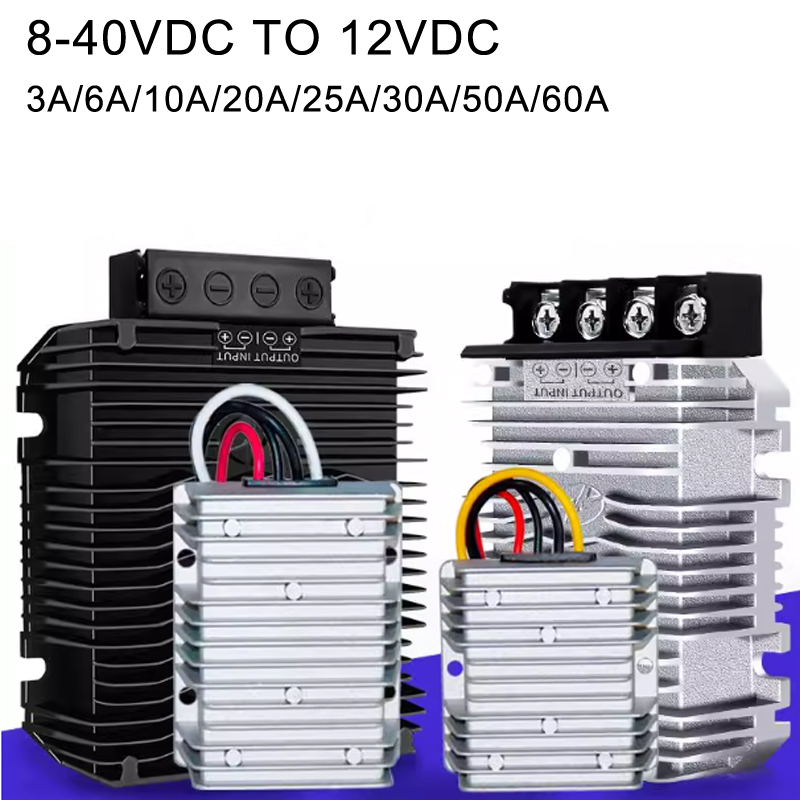
The Role of DC to DC Converters in Power Systems
DC to DC converters are crucial in ensuring that electronic devices receive the correct voltage for stable operation. For instance, a solar panel system often produces varying amounts of power depending on sunlight exposure, requiring a DC to DC converter to regulate the voltage for battery charging or inverter systems.
In LED lighting, the DC to DC converter ensures that the voltage is appropriate for each LED type, preventing flickering or damage to the LEDs. Similarly, in transportation systems, Smunchina's DC-DC converters help regulate power systems to maintain performance and safety in electric vehicles and railway systems.
Smunchina's Contribution in Power Conversion
Smunchina has been at the forefront of the DC-DC converter market, offering solutions that support a wide range of applications. The company's converters are designed with high efficiency, compact form factors, and reliable performance, making them ideal for industries such as industrial automation, medical systems, and transportation.
Application Area | DC to DC Converter Role | Smunchina’s Contribution |
LED Lighting | Provides steady voltage for optimal performance | High-efficiency converters for energy savings |
Industrial Automation | Regulates voltage in automation systems | Ensuring stability and reliability |
Transportation | Powers electric vehicles and railway systems | Delivering reliable power for critical applications |
Key Types of DC to DC Converters
Boost Converters
A boost converter is a type of DC to DC converter that increases the input voltage, also known as "step-up conversion." This type of converter is widely used when a higher voltage is required from a lower-voltage source, such as a battery.
● Definition and Use: Boost converters are crucial when the voltage needs to be raised without relying on external AC power sources. They are most commonly used in solar power systems, where a low DC voltage from solar panels is boosted to a higher voltage suitable for charging batteries or feeding power into an inverter.
● Applications in Solar Power Systems: Solar panels generate DC power, but the voltage can fluctuate depending on weather conditions. Boost converters help stabilize and step up the voltage to the required level, ensuring efficient power storage and use. Smunchina, with its expertise in power supply solutions, provides boost converters that help optimize the performance of renewable energy systems.
Buck Converters
A buck converter works in the opposite way to a boost converter. It steps down the voltage from a higher level to a lower one, making it ideal for applications where a stable, lower voltage is required.
● Definition and Use: Buck converters are known for their ability to efficiently reduce the input voltage to a lower, more manageable output. This functionality is especially useful in battery-powered devices like smartphones, laptops, and tablets, where power management is crucial for extending battery life.
● Applications in Battery-Powered Devices: The need for a stable voltage level to power electronic components is central in portable devices. Smunchina manufactures buck converters that provide the necessary power regulation, allowing battery-powered systems to operate efficiently without wasting energy.
Type of Converter | Purpose | Key Applications |
Boost Converter | Step-up voltage (increases voltage) | Solar power systems, battery charging |
Buck Converter | Step-down voltage (reduces voltage) | Mobile devices, laptops, power supplies |
Buck-Boost Converter | Step-up and step-down conversion | Electric vehicles, renewable energy systems |
Buck-Boost Converters
A buck-boost converter combines the capabilities of both a buck and a boost converter, making it highly versatile. It can either increase or decrease the input voltage depending on the requirements.
● Explanation: The buck-boost converter is unique because it can operate in both directions, adjusting the voltage up or down. This flexibility makes it suitable for devices with fluctuating power demands, such as electric vehicles and renewable energy systems.
● Examples in Electric Vehicles: In electric vehicles, the battery voltage can vary based on the charge level, and a buck-boost converter helps ensure that the system receives the optimal voltage for efficient operation. Similarly, in solar energy systems, buck-boost converters help regulate the voltage to ensure the efficient transfer of power from the panels to the batteries or the grid.
How Do DC to DC Converters Work?
Basic Principles of Operation
The core function of a DC to DC converter is to change the input voltage to a different output voltage without converting DC into AC. To achieve this, converters use a combination of switching devices, inductors, and capacitors.
● Role of Switching: In a DC to DC converter, an electronic switch (such as a MOSFET or BJT) opens and closes rapidly. The switch controls the flow of current and determines whether the inductor stores or releases energy. This switching action is controlled by a Pulse Width Modulation (PWM) signal, which adjusts the duty cycle to control the output voltage.
● Inductors and Capacitors: The inductor stores energy when the switch is ON and releases it when the switch is OFF. The capacitor smooths out the fluctuations in voltage, ensuring a steady output. These components are integral to maintaining the stability and efficiency of Smunchina's DC-DC converters, which are designed to handle a wide range of applications with high efficiency.
Component | Function |
Inductor | Stores energy when the switch is ON and releases it when OFF |
Capacitor | Smooths voltage fluctuations, ensuring stable output |
Switch (MOSFET/BJT) | Controls the flow of current, regulating energy storage and release |
The Switching Process
When the switch in a DC to DC converter is ON, current flows through the inductor, and energy is stored. Once the switch is turned OFF, the inductor's magnetic field collapses, and the stored energy is released to maintain a continuous flow of current to the load.
● Switch ON: When the switch is ON, current flows through the inductor, which stores energy in its magnetic field. This energy is used later to regulate the output voltage.
● Switch OFF: When the switch is OFF, the current is redirected through the diode to the output capacitor, where it is stored until needed by the load. The inductor's collapsing magnetic field generates a higher voltage, helping to regulate the output voltage.
Voltage Regulation
Voltage regulation is essential to ensure that the output voltage remains stable, regardless of variations in the input voltage or load conditions. This is achieved through feedback mechanisms.
● Feedback Mechanism: The output voltage is monitored by a control circuit, which adjusts the duty cycle of the switch. This ensures that the converter consistently provides the desired output voltage, maintaining efficient power delivery to the load. Smunchina's DC-DC converters incorporate advanced feedback control systems to ensure high reliability and stable output across a wide range of applications.
Efficiency of DC to DC Converters
Why is Efficiency Important?
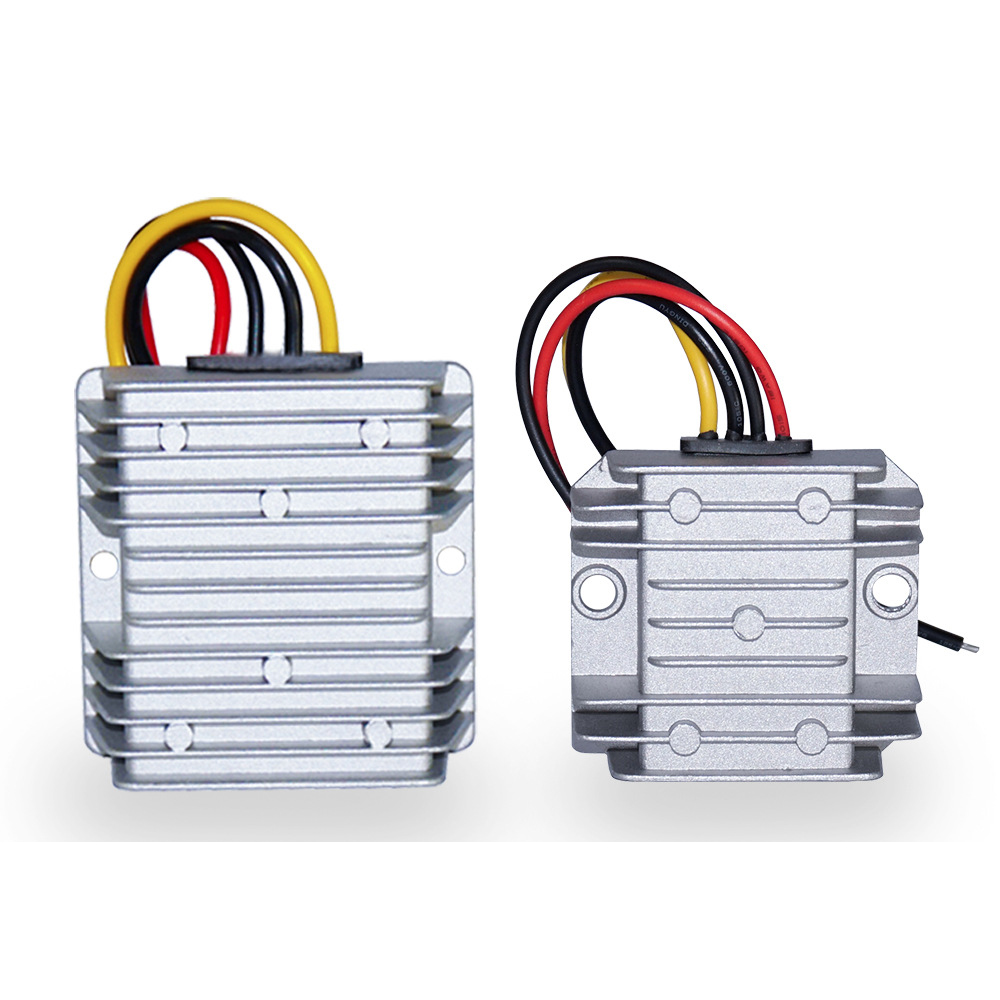
Efficiency plays a crucial role in the performance of DC to DC converters, affecting several key factors such as battery life, heat dissipation, and overall power management. A highly efficient DC to DC converter ensures that the maximum amount of energy is used effectively, minimizing wastage and reducing the need for additional cooling systems.
● Battery Life: In battery-powered devices, high efficiency means that more of the battery's energy is utilized, allowing the device to run for a longer period before needing a recharge. Devices like smartphones and laptops rely heavily on this efficiency to extend battery life, ensuring a better user experience.
● Heat Dissipation: Low-efficiency converters tend to waste energy as heat, which can lead to overheating. A more efficient converter reduces the heat generated during power conversion, helping to maintain stable device operation and extend the lifespan of internal components.
● Power Management: Efficient converters ensure that power is consistently delivered at the correct voltage, reducing the need for complex cooling solutions and minimizing unnecessary power consumption.
Smunchina, known for producing high-quality DC-DC converters, places a strong emphasis on efficiency in its products, which are widely used in industries such as automotive and communication systems. Their commitment to innovation and reliability ensures that their products meet the demanding power requirements of modern technologies.
Efficiency Impact | Effect |
Battery Life | Extends usage time between charges |
Heat Dissipation | Reduces temperature buildup, improving component lifespan |
Power Management | Ensures optimal voltage levels for efficient system operation |
How to Calculate the Efficiency of a DC to DC Converter
To understand how efficient a DC to DC converter is, you need to evaluate how much of the input power is successfully converted into usable output power. The higher the percentage of output power, the more efficient the converter is.
For example:
● If a converter inputs 50W of power and outputs 45W, the converter operates at 90% efficiency, with only 10% of the energy lost, usually as heat.
● This highlights the importance of efficiency in ensuring minimal energy loss and maximizing the converter's performance.
Applications of DC to DC Converters
In Solar Power Systems
DC to DC converters play a vital role in solar energy systems, where they are used to step up or step down the voltage from solar panels to ensure efficient battery charging or connection to the grid.
● Boosting Low Voltage: In solar systems, the voltage generated by solar panels can often be lower than required for charging batteries or feeding power into an inverter. Boost converters are used to increase the voltage to the required level.
● Energy Storage Optimization: By efficiently converting the solar energy, Smunchina’s DC-DC converters ensure that the energy collected is stored in batteries with minimal loss, contributing to higher overall system efficiency.
In Electric Vehicles
In electric vehicles (EVs), DC to DC converters are used to convert the high-voltage battery power into the correct voltage for various low-voltage components like the lights, infotainment systems, and electric motors.
● Powering Components: DC to DC converters ensure that different vehicle systems receive stable power, allowing the vehicle to run smoothly and efficiently.
● Battery Voltage Regulation: These converters also manage the battery voltage, stepping it down when necessary to power auxiliary systems in the EV.
Application Area | DC to DC Converter Role | Smunchina’s Contribution |
Solar Power Systems | Converts solar panel voltage to battery or grid voltage | Optimizing solar energy storage and usage |
Electric Vehicles | Manages power distribution between high-voltage and low-voltage systems | Ensuring efficient power regulation in EVs |
Consumer Electronics | Powers devices with stable voltage from batteries | Enhancing battery life and device efficiency |
In Consumer Electronics
DC to DC converters are essential in consumer electronics, ensuring that devices like smartphones, laptops, and tablets receive stable and efficient power for optimal performance.
● Voltage Regulation: They provide consistent voltage for each component of the device, preventing issues like overheating or malfunction.
● Power Efficiency: High efficiency in DC to DC converters helps extend battery life in portable devices, allowing users to get the most out of their devices between charges.
In Renewable Energy
In renewable energy systems, such as solar and wind power, DC to DC converters regulate the fluctuating energy produced by these systems, ensuring it can be efficiently stored or fed into the grid.
● Power Flow Optimization: These converters adjust the voltage output from renewable energy sources to meet the needs of the energy storage systems or grid-tied inverters.
● Efficiency in Energy Use: By ensuring that renewable energy is effectively converted and stored, Smunchina's DC-DC converters help improve the overall efficiency of renewable energy systems.
Conclusion
In this article, we explored how DC to DC converters play a vital role in regulating voltage levels for various electronic systems. We discussed the different types of converters, including boost, buck, and buck-boost, and their applications in industries like solar power, electric vehicles, and consumer electronics.
Smunchina is at the forefront of providing high-efficiency DC-DC converters, ensuring stable power management in modern technologies. These converters are essential for extending battery life, reducing heat dissipation, and improving the overall performance of electronic devices.
FAQ
Q: What is a DC to DC converter?
A: A DC to DC converter is an electronic device that converts a direct current (DC) voltage from one level to another. It can either step up (boost) or step down (buck) the voltage to meet the requirements of the system.
Q: How does a DC to DC converter work?
A: A DC to DC converter works by using switching devices, inductors, and capacitors to either increase or decrease the input voltage. The switch turns on and off rapidly, controlling energy storage and release to maintain a stable output voltage.
Q: Why are DC to DC converters important in solar power systems?
A: In solar power systems, DC to DC converters are used to regulate the voltage from solar panels to ensure efficient battery charging or grid connection, making them essential for effective energy storage and use.
Q: How does a DC to DC converter improve energy efficiency?
A: DC to DC converters reduce energy loss by efficiently converting voltage without excessive heat dissipation, thereby extending battery life and improving the overall power management of devices like smartphones and electric vehicles.
Q: What are the common types of DC to DC converters?
A: The common types of DC to DC converters are boost converters (increase voltage), buck converters (decrease voltage), and buck-boost converters (both increase and decrease voltage), each serving different power requirements in various devices.