In an industrial control panel, the most advanced PLC, the smartest sensors, and the most robust communication modules still depend on one basic foundation: stable DC power. When power quality is inconsistent, the symptoms show up everywhere—random PLC resets, unstable I/O signals, nuisance alarms, or devices that fail early because heat and ripple stress accumulate over time. That’s why engineers treat the power supply as more than a commodity part. In modern automation projects, a DIN rail power supply has become a preferred choice because it fits the way panels are built today: compact layouts, modular components, faster assembly, and easier serviceability. It’s a practical solution that improves panel consistency from design to commissioning and long-term maintenance.
From our perspective at Zhejiang Ximeng Electronic Technology Co., Ltd., DIN rail power supplies are widely used not only because they mount easily, but because they bring predictable performance and protection into industrial environments. When a power supply is selected correctly, it improves system uptime, reduces troubleshooting time, and supports safer panel design. In this article, we’ll explain the key benefits of DIN rail power supply units in industrial control panels, where they add the most value, what features buyers should prioritize, and how to match specifications to real application needs.
What Is a DIN Rail Power Supply
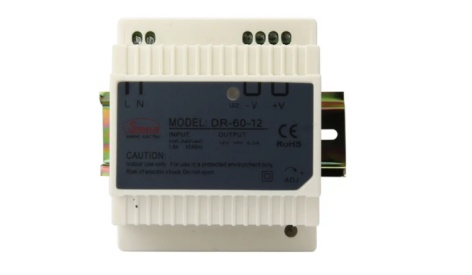
A DIN rail power supply is a power conversion unit designed to mount on a standard DIN rail inside a control cabinet. It typically converts AC input (or sometimes DC input) into a regulated DC output—most commonly:
24V DC (very common in industrial automation)
12V DC or 5V DC (for specific devices)
48V DC (used in some control and communication systems)
The DIN rail format is widely adopted because it supports modular panel design—components can be mounted, replaced, and reorganized efficiently without custom brackets for each device.
Key Benefit One Space Saving and Clean Panel Layout
Industrial control panels are becoming increasingly crowded as automation systems grow more complex. In many projects, engineers are expected to integrate more functions, more control devices, and more monitoring components into the same cabinet size. This creates pressure not only on electrical design, but also on layout efficiency. DIN rail power supplies are widely valued because they support compact cabinet mounting and a cleaner, more standardized panel structure.
One of the main advantages is that DIN rail power supplies align naturally with other DIN rail-mounted components such as miniature circuit breakers, terminal blocks, relays, and protection devices. This creates a more organized internal layout and makes the overall panel easier to assemble, inspect, and maintain.
They also help improve wire routing. With stable terminal orientation and a predictable mounting position, engineers can separate input and output wiring more clearly, reduce clutter, and support a neater panel appearance. In addition, their compact form factor allows better use of vertical rail space, which is especially important in cabinets where every millimeter matters.
For panel builders working on repeat orders or standardized product lines, DIN rail power supplies also improve design consistency. Their modular installation style makes component placement easier to repeat across multiple builds, which supports production efficiency and reduces layout variation.
Layout Benefit Table
Panel Challenge | How DIN Rail Power Supply Helps |
Limited cabinet space | Compact form factor and rail mounting |
Wiring organization | Stable terminal orientation and routing |
Multi-device layout | Standard DIN rail modular structure |
Panel standardization | Repeatable placement across builds |
Key Benefit Two Faster Installation and Easier Replacement
DIN rail mounting simplifies assembly. Instead of drilling custom holes or fitting special brackets, installers can clip the power supply onto the rail and wire it according to the panel design.
This creates practical advantages:
faster production during panel build
easier modifications during commissioning
quicker replacement during maintenance
reduced downtime when a unit must be swapped
In industrial operations, serviceability matters. A power supply that can be replaced quickly helps keep production lines running.
Key Benefit Three Stable DC Output for Sensitive Control Devices
A DIN rail power supply is built for regulation and stability. Many automation devices require stable input voltage to perform correctly.
Stable DC output supports:
PLC stability (prevents resets and logic faults)
accurate sensor signal behavior
stable fieldbus and communication module operation
consistent actuator and relay performance
If DC voltage sags under load or spikes during switching, devices can behave unpredictably. A properly sized DIN rail power supply helps reduce these issues by maintaining regulated output under changing load conditions.
Key Benefit Four Built In Protection Features That Improve Uptime
Industrial environments bring electrical stress: inrush currents, short circuits, overload events, and temperature rise inside cabinets. DIN rail power supplies typically include protective functions that improve system robustness.
Common protection features include:
These protections help prevent a small wiring mistake or a downstream device fault from turning into major panel damage.
Protection feature table
Protection Feature | What It Prevents | Why It Matters |
Overload protection | overheating and stress | extends service life |
Short-circuit protection | damage during faults | improves safety and uptime |
Over-voltage protection | device damage | protects PLC and I/O modules |
Over-temperature protection | thermal runaway | supports cabinet reliability |
Key Benefit Five Better Thermal Management in Control Cabinets
Control cabinets are often hot—especially when installed near machines, in summer climates, or in sealed enclosures. Heat is a major cause of power supply aging and failures.
DIN rail power supplies are typically designed with:
airflow-friendly enclosure structures
thermal derating logic (in many designs)
heat-efficient switching topology compared with older linear supplies
Better thermal behavior means:
This is why engineers often consider efficiency and temperature derating curves when selecting a power supply for real industrial conditions.
Key Benefit Six Easy Expansion and Multi Supply Architectures
Industrial control systems evolve. A panel built today may need additional modules, sensors, or control functions next year.
DIN rail power supplies support:
adding a second unit for redundancy
splitting loads into separate power zones
powering different voltage rails (24V + 12V + 5V solutions)
integrating DC UPS modules or buffer modules (in some architectures)
This modularity supports scalable control panel design without requiring full redesign.
Typical Applications in Industrial Control Panels
DIN rail power supplies are commonly used in:
PLC control panels
sensor and instrumentation cabinets
industrial networking and communication panels
motor control and automation systems (for control circuits)
packaging lines, conveyors, robotics support cabinets
building automation panels
They provide the stable DC foundation required across industries.
How to Choose the Right DIN Rail Power Supply
A good selection process is based on real load needs and installation environment—not only the output voltage.
A Output voltage and total load current
Calculate:
B Efficiency and cabinet temperature
If the cabinet is hot, choose a unit with good efficiency and suitable derating behavior.
C Protection and reliability needs
Some projects require stronger protection logic, alarm outputs, or redundancy planning.
D Mechanical fit and wiring convenience
Check:
rail space
terminal direction
wiring access
ventilation clearance
Buyer checklist table
Selection Item | What to Confirm |
Voltage | 24V DC (or your device requirement) |
Current | total load + margin |
Heat conditions | cabinet temperature and airflow |
Protection | short-circuit, overload, over-voltage |
Mounting | DIN rail size and clearance |
Expansion | future load growth planning |
Final Thoughts
A DIN rail power supply is popular in industrial control panels because it solves real engineering problems: compact mounting, clean modular layout, stable DC output, built-in protection, and easier maintenance. When selected correctly, it reduces downtime risks and supports long-term reliability for PLCs, sensors, communication modules, and automation devices. In modern industrial systems where uptime matters, the power supply is not an accessory—it is the foundation of consistent control performance.
At Zhejiang Ximeng Electronic Technology Co., Ltd., we provide DIN rail power supply solutions designed for industrial panel environments, focusing on stable output, practical protection features, and efficient installation. If you want to learn more about selecting the right DIN rail power supply for your control cabinet—based on voltage, load, environment, and expansion needs—you are welcome to contact Zhejiang Ximeng Electronic Technology Co., Ltd. for more information.
FAQ
1) Why is 24V DIN rail power supply so common in industrial control panels?
24V DC is widely used because it matches most PLC, sensor, and industrial control device requirements and supports stable low-voltage automation architecture.
2) How do I size a DIN rail power supply for my panel?
Add up the current requirements of all loads, consider peak/inrush demands, and include a practical margin to avoid running at full load continuously.
3) What protection features should I look for in a DIN rail power supply?
Common useful protections include overload, short-circuit, and over-voltage protection, which help protect devices and improve uptime.
4) How does cabinet temperature affect power supply selection?
Higher cabinet temperature can reduce available output capability and shorten service life. Choosing an efficient unit and ensuring airflow clearance improves stability.