Complex medical and industrial systems frequently require distinct voltage rails to operate correctly. You might need +5V for logic processors and ±15V for sensitive analog sensors or amplifiers. Engineers face significant challenges when integrating these diverse power needs.
Utilizing separate power supplies for each voltage requirement increases physical footprint. It also complicates thermal management across the device. This disjointed approach multiplies potential failure points and elevates overall compliance testing difficulties.
A triple output switching power supply consolidates these varying requirements into a single cohesive unit, streamlining system architecture. This article details how to evaluate, specify, and integrate these units for high-reliability applications. You will learn the best practices for handling cross-regulation, navigating strict compliance criteria, and implementing effective redundancy.
Key Takeaways
Consolidating multiple voltage rails into a single power supply reduces footprint and improves overall Mean Time Between Failures (MTBF) by minimizing component count.
Medical and industrial use cases dictate strict, differing compliance standards—specifically regarding isolation (MOPP/MOOP), leakage current, and electromagnetic interference (EMI).
Active Power Factor Correction (PFC) and proper EMI filtering are non-negotiable for modern regulatory compliance and grid stability.
Evaluating a multi-output unit requires careful attention to cross-regulation characteristics and minimum load requirements on the primary rail.
The Engineering Case for a Triple Output Switching Power Supply
Modern electronic architectures demand high efficiency and compact layouts. Integrating three distinct outputs typically involves one high-current primary rail and two lower-current auxiliary rails. This consolidated design replaces the need for cascading DC-DC converters. It also eliminates the necessity of mounting multiple standalone AC-DC units inside a single chassis. A unified power strategy reduces parasitic power losses. It also drastically simplifies printed circuit board (PCB) routing.
Cost versus Reliability Equation
Engineers must always balance hardware costs against system reliability. Consolidating power rails yields significant technical advantages. You reduce the overall Bill of Materials (BOM). Lower procurement volumes and fewer assembly steps directly streamline manufacturing processes. We also see a substantial statistical improvement in system reliability.
To understand the MTBF impact, consider these reliability principles:
Component Count Reduction: Every individual power component carries a failure probability. Removing secondary AC-DC converters eliminates redundant input stages and high-voltage capacitors.
Simplified Interconnects: Fewer standalone supplies mean fewer wiring harnesses. Harnesses and connectors represent common failure points in vibrating environments.
Thermal Concentration: A single, high-efficiency supply centralizes heat generation. You can target cooling mechanisms like heat sinks or fans more effectively.
You must respect the thermal limits of the chosen unit. Centralizing heat generation only improves reliability if you implement proper thermal dissipation strategies.
Space and Weight Optimization
Volumetric power density represents a primary constraint in modern hardware design. Portable medical devices demand lightweight architectures to ensure mobility. Compact industrial control panels often lack the physical depth for bulky legacy power systems. A multi-output switching supply maximizes available space. It allows designers to shrink the overall device enclosure or repurpose the saved space for larger battery backups.
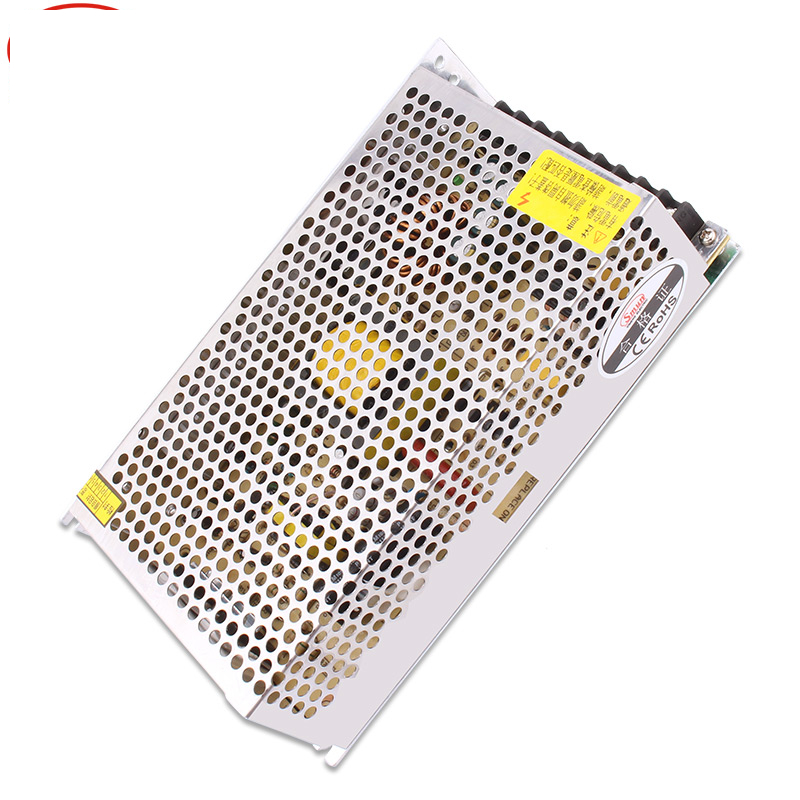
Different operating environments impose varying demands on power components. Medical facilities prioritize patient safety above all else. Industrial floors require ruggedness and immunity to harsh electrical transients. Understanding these distinctions helps you specify the correct unit.
Medical Equipment Requirements (IEC 60601-1)
Designing for healthcare applications requires strict adherence to the IEC 60601-1 standard. Patient protection remains the fundamental priority. You must source units featuring 2x MOPP (Means of Patient Protection) isolation. This double-layer isolation ensures patient safety even if one protective barrier fails.
Leakage current regulations also present a massive hurdle. Standards strictly limit Earth Leakage and Patient Leakage currents to microamp levels. High leakage currents can cause cardiac arrhythmias in susceptible patients. Furthermore, manufacturers must integrate ISO 14971 compliance into their design process. This integration proves they have conducted thorough risk management evaluations.
Industrial Equipment Requirements (IEC/EN 62368-1)
Industrial applications fall under the IEC/EN 62368-1 hazard-based safety standard. The focus shifts from patient isolation toward environmental ruggedness. Industrial power supplies must endure wider operating temperature ranges. They frequently require conformal coating options to resist moisture, dust, and corrosive gases.
Overload and transient handling capabilities are also critical. Factory automation systems utilize heavy inductive loads like motors, solenoids, and relays. These components generate massive inrush currents upon startup. A robust industrial supply must handle these spikes without instantly tripping its internal overcurrent protection circuits.
Bridging the Gap
Many engineers now specify medical-grade supplies for industrial applications. This strategy future-proofs hardware safety. Medical-grade units typically feature superior isolation and lower noise floors. Using a single medical-grade SKU across both medical and industrial product lines simplifies supply chain logistics. It reduces inventory complexity and simplifies global compliance audits.
Compliance Standard Comparison Table
Specification Dimension | Medical Standard (IEC 60601-1) | Industrial Standard (IEC/EN 62368-1) |
Isolation Requirement | Strict (2x MOPP / 2x MOOP) | Standard Basic/Reinforced Isolation |
Leakage Current | Extremely low (< 100µA typical for patient) | Moderate (often < 1mA to 3.5mA) |
Environmental Focus | Controlled clinical environments | High temp, dust, vibration, inductive loads |
Risk Management | ISO 14971 integration mandatory | Hazard-based safety engineering |
Core Technical Dimensions for Component Evaluation
Selecting the right power unit requires deep technical scrutiny. You must look beyond simple voltage and current ratings. The internal architecture determines how the supply interacts with the main AC grid and your sensitive load circuits.
Power Factor and Efficiency
Power Factor Correction minimizes harmonic distortion on the AC input line. Integrating a high-quality PFC power supply design ensures compliance with the EN61000-3-2 standard. Active PFC circuitry reduces the apparent power draw from the grid. This efficiency prevents overloaded facility wiring. It also stabilizes the internal DC bus voltage before the switching stage. Higher efficiency yields less wasted heat, directly extending the unit's operational lifespan.
Cross-Regulation and Minimum Load Constraints
Cross-regulation represents the most critical challenge in multi-output designs. In most configurations, the primary output dictates the regulation of the auxiliary outputs. The feedback loop typically monitors the high-current main rail (e.g., +5V). It ignores the secondary rails (e.g., ±12V or ±15V).
If the load on the main rail drops significantly, the duty cycle of the switching transistor decreases. This decrease causes the voltage on the auxiliary rails to sag. Conversely, a heavy load on the main rail can force the auxiliary voltages to spike. You face a strict design necessity here. You must maintain a minimum load on the main rail to prevent voltage drift on the secondary rails.
Chart: Cross-Regulation Drift Characteristics
Main Rail Load (+5V) | Auxiliary Rail Load (±15V) | Expected Aux Voltage Behavior | System Impact |
Below 10% (Under-loaded) | Constant 50% | Drops below 14.0V | Analog sensor inaccuracy |
50% (Nominal) | Constant 50% | Stable at ±15.0V | Optimal performance |
100% (Over-loaded) | Below 10% | Spikes above 16.5V | Potential op-amp damage |
Noise and EMI Mitigation
Switching regulators inherently generate high-frequency noise. You must carefully evaluate the internal filtering capabilities of the unit. Medical devices require extremely low noise floors for EKG or imaging sensors. In heavy industrial environments, factory floor noise poses a bidirectional threat.
You must prevent external grid noise from disrupting your sensitive analog circuits. Conversely, you must prevent your supply from injecting switching noise back into the main grid. When internal filters prove insufficient for massive industrial setups, engineers will pair the supply with an external three phase EMI filter. This external component aggressively attenuates high-frequency interference. It ensures stable operation near variable frequency drives or large contactors.
Global deployment demands input flexibility. Legacy systems often relied on a bulky step up down transformer to adapt distinct regional grid voltages. Modern universal input switching architectures (typically accepting 90-264VAC) completely eliminate this outdated requirement. A single power supply SKU can now ship to North America, Europe, and Asia. This versatility drastically reduces regional SKUs and inventory complexity for the manufacturer.
Integrating Battery Backup and Redundancy
Many critical systems cannot tolerate even a momentary loss of power. Implementing redundancy and backup architectures ensures uninterruptible operations.
Uninterruptible Operations and Architecture
Life-support ventilators, surgical equipment, and continuous industrial monitoring systems demand absolute uptime. These applications frequently utilize a UPS charger power supply architecture. The primary switching supply provides the operational voltages while simultaneously charging an external battery bank. When AC power fails, the system transitions instantly to DC battery power.
Implementation Strategy
Interfacing a triple-output supply with a Battery Management System (BMS) requires careful planning. You must ensure seamless switchover during a grid failure. The transition must occur without dropping critical logic or sensor rails. Typically, engineers employ diode OR-ing circuits. These circuits allow the battery to take over the DC bus instantly without back-feeding current into the inactive AC-DC supply. You must account for the slight voltage drop introduced by the diodes to maintain tight regulation on your 5V logic line.
Hold-Up Time Considerations
Grid power rarely fails cleanly. Transient brownouts and fast voltage sags happen frequently. Hold-up time dictates how long the power supply can maintain stable output voltages after the AC input drops.
You must evaluate the manufacturer's capacitor sizing. Sufficient hold-up time (typically 16 to 20 milliseconds) allows the system to ride through brief AC interruptions. This short buffer provides crucial milliseconds of power retention. It gives the backup systems or relays enough time to engage before the logic processors reset or analog sensors lose calibration.
Implementation Risks and Shortlisting Logic
Selecting a power supply off a datasheet carries inherent risks. Engineers must look past marketing claims and evaluate worst-case operational scenarios.
Thermal Derating Challenges
Manufacturers often advertise maximum power ratings under optimal, force-cooled conditions. However, many medical and industrial applications require enclosed, fanless operation to maintain IP ratings or sterility. You must carefully assess thermal derating curves in the datasheet.
A unit rated for 150 watts at room temperature might only deliver 100 watts in a 50°C fanless enclosure. Ignoring these convection-cooled degradation curves leads to premature component failure. Always calculate your maximum power draw against the highest expected ambient temperature inside your specific enclosure.
Custom vs. Standard Off-the-Shelf (COTS)
When distinct voltage combinations are required, designers face the "make versus buy" dilemma. Developing a custom power supply offers perfect alignment with your system architecture. However, custom designs carry massive upfront Non-Recurring Engineering (NRE) costs.
Furthermore, running a custom design through medical or industrial safety certifications takes many months. Weigh these hurdles against the immediate availability of standard COTS configurations. Standard units offer immediate prototyping capability. They already hold necessary safety approvals, massively accelerating your time-to-market.
Vendor Vetting Matrix
Choosing the right hardware partner is just as critical as choosing the right specification. Use the following criteria when shortlisting power supply manufacturers:
Verifiable Compliance Certificates: Demand up-to-date documentation for UL, TUV, and CE approvals. Ensure the certificates explicitly cover the specific model numbers you intend to buy.
Lifecycle Support Policies: Medical and industrial equipment often stays in service for over a decade. Vet the vendor's long-term lifecycle support. Demand transparent end-of-life (EOL) notification policies so you are not caught off guard by sudden part obsolescence.
Engineering Assets: Ensure the availability of 3D CAD models for mechanical fit checks. Request detailed EMI test reports for rapid prototyping and preliminary compliance assessments.
Conclusion
A triple output switching power supply represents a strategic architectural choice. It seamlessly balances physical footprint, material costs, and system reliability for complex electronic designs. By consolidating multiple voltage rails, you eliminate parasitic losses and reduce failure points associated with cascading converters. However, successful integration demands rigorous attention to thermal derating curves and cross-regulation behavior.
Your next steps involve conducting a thorough power budget analysis. Review your exact voltage and current requirements against standard COTS configurations. Always request evaluation samples to test under your specific thermal conditions. Most importantly, consult with the manufacturer's field application engineers (FAEs). Their expertise will help you verify cross-regulation tolerances and ensure your final product meets all critical compliance mandates.
FAQ
Q: What are the most common voltage combinations for a triple output power supply?
A: The most prevalent configuration provides +5V as the primary rail for logic components. This is typically combined with ±12V or ±15V auxiliary rails used for analog circuits and operational amplifiers. Another common industrial setup includes +5V, +12V, and +24V to support mixed logic, drive motors, and relay applications simultaneously.
Q: How does cross-regulation affect sensitive medical sensors?
A: If the main load fluctuates significantly, auxiliary voltage rails may drift. This drift can distort the baseline readings of sensitive analog medical sensors. Critical sensors may require secondary point-of-load (PoL) regulators if the power supply's cross-regulation tolerance exceeds the sensor's acceptable variance.
Q: Can a triple output supply replace a UPS charger power supply system?
A: No. While it provides multiple operating voltages, true UPS functionality requires dedicated battery charging and automatic switchover circuitry. However, a triple output unit can certainly be driven by the stable DC output of a centralized UPS system to distribute various voltages throughout a device.
A: Generally, no. Most modern industrial and medical SMPS units feature universal AC inputs (typically 90-264VAC). This wide input range eliminates the need for bulky external step-down transformers for basic grid voltage adaptation across different geographical regions.