Introduction
Have you ever wondered how devices manage varying voltage needs? The answer lies in the DC to DC converter. This technology is crucial for efficiently converting power, ensuring devices work smoothly. In this article, we will explore how DC to DC converters operate and why they’re so important in everything from portable electronics to solar power systems.
How Does a DC to DC Converter Work?
The Basic Principles of DC to DC Conversion
At its core, a DC to DC converter is designed to change the voltage level of a direct current (DC) power source to either a higher or lower value. This process relies on a combination of key components that make up the converter circuit. Here's an overview of the basic mechanism:
● Step-up (Boost) Converters: These increase the voltage from a lower value to a higher one. For example, it could take a 5V input and step it up to 12V, making it useful for applications like battery charging or power supply systems that need higher voltages.
● Step-down (Buck) Converters: These reduce the voltage from a higher value to a lower one. For instance, a 12V input can be stepped down to 5V, commonly used in power supply systems for low-voltage components like microcontrollers or LED lights.
Key Components in DC to DC Converters
● Inductors: These components store energy in the form of a magnetic field. Inductors are crucial in both boost and buck converters, helping regulate the flow of energy and smooth out voltage fluctuations.
● Diodes: Diodes allow current to flow in only one direction, ensuring that the energy is directed appropriately through the circuit.
● Switches: The switch, usually a MOSFET or BJT transistor, rapidly turns the circuit on and off to control the flow of energy. This is typically done using a PWM (Pulse Width Modulation) signal, controlling the on/off timing to adjust the output voltage.
● Capacitors: These components store electrical charge and help smooth out the fluctuations in voltage caused by the switching process.
Smunchina’s DC-DC converters integrate these components to ensure efficient and stable power conversion. With Smunchina’s emphasis on innovation and reliability, their products serve industries requiring high-performance power solutions, such as industrial automation and medical devices.
Understanding the Conversion Process
The heart of the DC to DC conversion process lies in the switching components and the control of the energy flow. When the switch is turned on, energy flows through the inductor and capacitor. Here's how the process works in each converter type:
● Boost Converter:
○ When the switch is closed (ON), current flows through the inductor, storing energy in its magnetic field.
○ When the switch is opened (OFF), the stored energy in the inductor is released, causing the voltage to increase.
○ This process continuously repeats, leading to a higher output voltage than the input.
● Buck Converter:
○ When the switch is closed, current flows through the inductor, increasing the magnetic field and storing energy.
○ When the switch is opened, the inductor's energy is released to the load, and the voltage is decreased.
○ By controlling the switching frequency, the output voltage is regulated to a lower value than the input.
Smunchina’s converters follow this mechanism, ensuring the voltage is converted efficiently, whether stepping up or stepping down, depending on the application.
Efficiency Considerations
Efficiency plays a crucial role in any power conversion system, and DC to DC converters are no exception. One of the main advantages of using DC to DC converters over traditional linear regulators is their ability to handle power more efficiently.
Here’s why:
● Less Heat Dissipation: Unlike linear regulators that dissipate energy as heat, DC to DC converters efficiently convert most of the input power into usable output power. This significantly reduces the need for complex cooling systems and lowers overall energy loss.
● Higher Efficiency: DC to DC converters, especially Smunchina’s models, often achieve efficiency levels above 90%, making them ideal for energy-sensitive applications like battery-powered devices and solar power systems. They are engineered for high-performance and reliability, making them a great choice for industrial automation and medical devices.
Efficiency Comparison: DC to DC Converters vs. Linear Regulators
Feature | DC to DC Converters | Linear Regulators |
Efficiency | 85% - 95% | 50% - 60% |
Heat Dissipation | Low | High (requires additional cooling) |
Application | Battery-powered devices, solar, automotive, industrial | Low power applications |
Use Case | Stepping up/down voltage | Maintaining constant output voltage |
By using a DC to DC converter, Smunchina’s solutions offer a significant boost in efficiency, making them highly suitable for high-demand environments like solar systems, where energy conservation is key.
Types of DC to DC Converters
Buck Converters (Step-Down)
A buck converter is designed to reduce the input voltage to a lower output voltage, making it ideal for applications where devices require a lower voltage than the power supply provides.
● How Buck Converters Work: Buck converters use an inductor to store energy when the switch is on and release it when the switch is off, thereby reducing the overall voltage supplied to the load. By rapidly switching the input voltage on and off, the average output voltage becomes lower than the input voltage.
● Common Applications:
○ Battery-powered devices: These devices require low voltages, which buck converters provide by stepping down the battery voltage to power components efficiently.
○ Automotive systems: Buck converters are used in cars to convert the high-voltage battery output to the low voltages needed for sensors and control systems.
○ Consumer electronics: Smartphones, laptops, and other portable electronics rely on buck converters to manage power effectively.
Smunchina’s buck converters are optimized for these types of applications, ensuring reliable and efficient power management for portable devices and automotive systems.
Boost Converters (Step-Up)
A boost converter is designed to increase the input voltage to a higher output voltage, making it ideal for applications where the voltage needs to be raised to power more demanding components.
● How Boost Converters Work: When the switch is closed, current flows through the inductor, storing energy in a magnetic field. When the switch is opened, the stored energy is released, causing the output voltage to increase. This process is repeated rapidly to maintain a high output voltage.
● Common Applications:
○ Solar energy systems: Boost converters step up the voltage from solar panels to a level suitable for charging batteries or powering grid systems.
○ Electric vehicles: In EVs, boost converters increase the battery voltage to power the electric motor efficiently.
○ Portable electronics: Devices like portable chargers and LED flashlights use boost converters to step up low input voltages for higher power requirements.
Smunchina’s boost converters are used in solar applications and electric vehicles, offering high efficiency and consistent power conversion, even with fluctuating input voltages.
Buck-Boost Converters
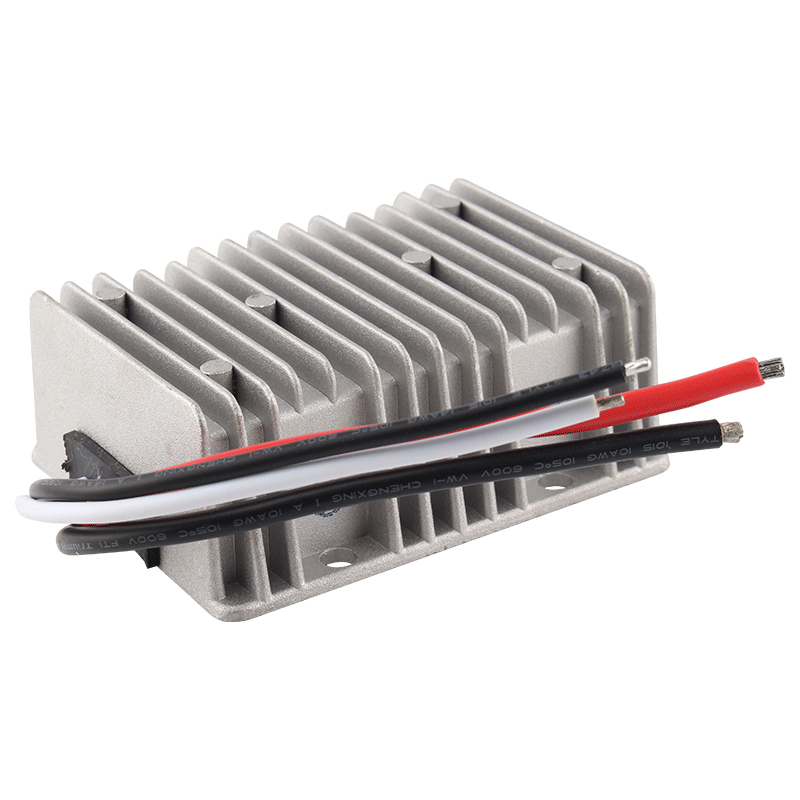
A buck-boost converter combines the functionality of both buck and boost converters, allowing it to step up or step down the voltage depending on the application’s needs. This makes it a highly versatile converter.
● How Buck-Boost Converters Work: These converters can either increase or decrease the voltage depending on the difference between the input and output voltage. If the input voltage is higher than required, it steps down the voltage. If the input voltage is lower, it steps it up to the desired level.
● Common Applications:
○ Solar systems: In solar applications, where the voltage from panels can fluctuate, a buck-boost converter ensures a steady output by adjusting the voltage as needed.
○ Battery-powered systems: In systems with variable battery voltages, buck-boost converters adjust the voltage to ensure efficient power delivery to the load.
Smunchina’s buck-boost converters are especially useful in solar power systems and battery-operated applications, where input voltage can vary due to environmental conditions or battery discharge levels.
Applications of DC to DC Converters
In Solar Power Systems
Smunchina’s DC-DC converters play a vital role in solar power systems by ensuring efficient power regulation and conversion. In solar systems, the voltage from the solar panels can fluctuate due to changes in sunlight and weather conditions. DC-DC converters help manage these fluctuations, ensuring that the energy is efficiently transferred and stored.
● Efficient Energy Transfer The DC-DC converters adjust the voltage from the solar panels to match the requirements of the batteries or grid. This helps optimize the energy storage and usage.
● Battery Charging Optimization These converters ensure that the battery charging process is efficient by providing stable voltage levels. This prevents overcharging and extends the life of the batteries.
Smunchina’s DC-DC solutions are designed to meet these needs, ensuring that solar systems function effectively in varying environmental conditions.
In Electric Vehicles
DC-DC converters are essential in electric vehicles (EVs), where they manage the power flow from the high-voltage battery to various vehicle systems. These converters ensure that all components, including the electric motor, sensors, and control systems, receive the right voltage for smooth operation.
● Voltage Regulation for the Motor DC-DC converters ensure that the motor receives a constant, reliable voltage, which is crucial for the vehicle's performance and efficiency.
● Efficient Power Distribution By stepping down the high voltage from the battery, these converters supply the lower voltage needed for auxiliary systems like lighting, infotainment, and sensors.
In Portable Electronics
For portable electronics such as smartphones, laptops, and LED flashlights, DC-DC converters are used to maintain a consistent voltage level across different internal components. This is essential for the reliable performance of the devices and efficient battery use.
● Voltage Stability for Devices DC-DC converters step down or step up the voltage depending on the needs of the device’s internal components, ensuring that each part functions at its optimal power level.
● Enhanced Battery Life By efficiently converting power, Smunchina’s DC-DC converters help extend battery life in portable electronics, reducing the need for frequent recharging and improving overall device efficiency.
Industrial and Medical Applications
DC-DC converters are crucial in both industrial automation and medical devices, where they ensure stable and reliable power regulation for sensitive equipment.
● Industrial Automation In industrial systems, DC-DC converters help power machinery, sensors, and control systems. Their ability to step up or step down voltage ensures that every part of the system operates at the correct voltage.
● Medical Devices For medical equipment like imaging machines and diagnostic devices, DC-DC converters provide the necessary stable voltage to ensure accurate and safe operation.
Smunchina’s DC-DC converters are designed to meet the high demands of these sectors, providing reliable power regulation for critical applications in both industrial and medical environments.
Why Are DC to DC Converters Important?
Energy Efficiency
DC to DC converters play a crucial role in energy efficiency, ensuring that power is used effectively without unnecessary waste. These converters allow the conversion of energy from one voltage level to another while minimizing losses, which is essential in a wide range of applications from battery-powered devices to industrial power systems.
● Reducing Energy Waste
● Unlike traditional linear regulators, which waste energy in the form of heat, DC to DC converters operate by switching components on and off rapidly. This process allows most of the input power to be converted into useful output, with minimal loss. This is especially important in applications where power conservation is critical.Enhancing Battery Life
In battery-powered systems, efficient power conversion can significantly extend battery life. Smunchina's DC-DC converters, for example, ensure that power is used optimally, reducing the need for frequent recharging in devices like electric vehicles and portable electronics.
Feature | Impact on Efficiency |
Energy Loss Reduction | Reduces wasted energy by minimizing heat dissipation |
Battery Efficiency | Extends battery life by optimizing power use |
Power Conservation | Maximizes the output power with minimal loss |
Space and Size Efficiency
One of the main advantages of DC to DC converters is their compact design, making them ideal for applications with limited space. These converters are highly efficient in terms of both size and power management, enabling integration into devices where space is at a premium.
● Compact Design
DC to DC converters are designed to be compact and lightweight, which makes them a perfect fit for small devices like smartphones, laptops, and portable chargers. Their small size does not compromise their efficiency, allowing manufacturers to integrate them into space-constrained designs without sacrificing performance.
● Smunchina’s DC-DC Converters
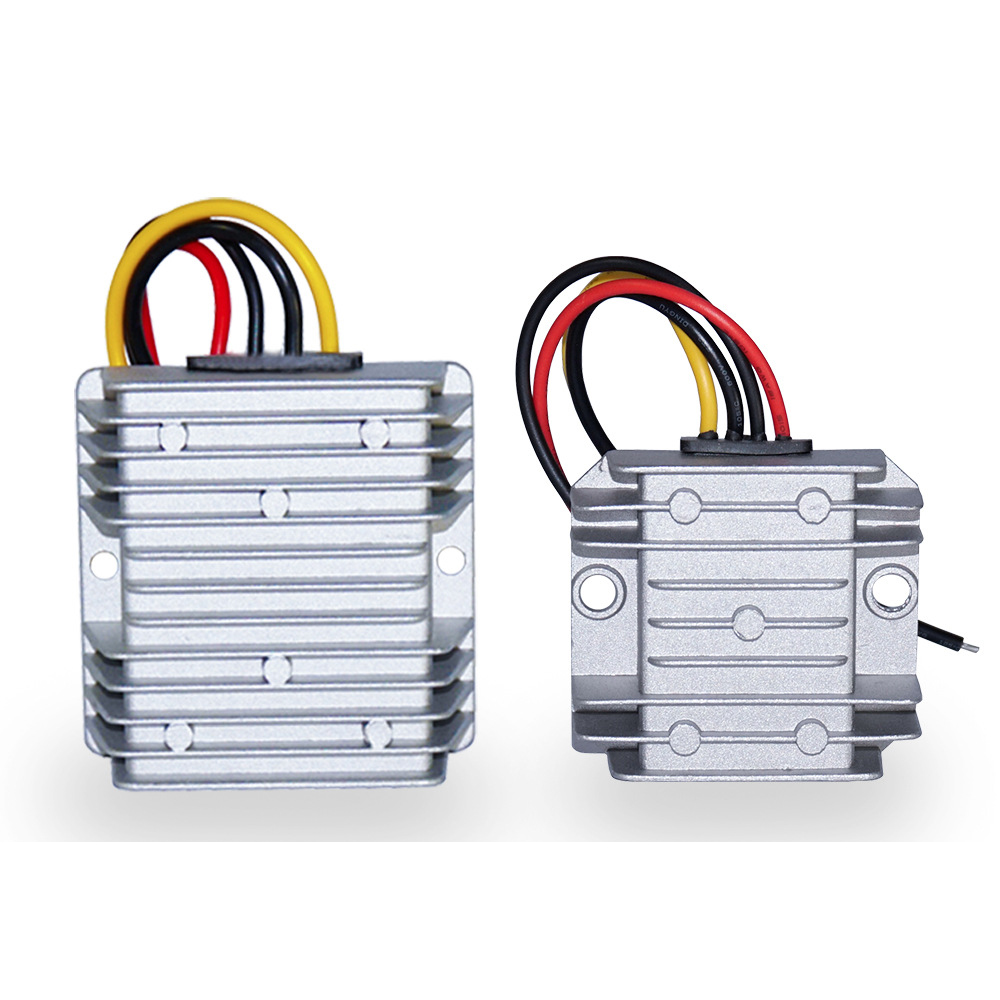
Smunchina’s compact DC-DC solutions are specifically designed for space-limited applications, such as consumer electronics and automotive systems, where the need for efficiency and reliability in a small package is critical.
Improved Power Management
Power management is another essential function of DC to DC converters, especially in systems with varying power demands. These converters regulate and distribute power effectively, making them ideal for use in environments where the input voltage fluctuates, or where multiple components need different voltage levels.
● Managing Fluctuating Power Requirements
In solar systems, for example, the power available can fluctuate due to changing sunlight conditions. DC to DC converters step up or step down voltage as needed, ensuring that the energy produced is properly regulated for efficient use or storage. This allows for stable performance even in unstable conditions.
● Distributing Power Effectively
In electric vehicles, DC to DC converters manage the distribution of power from the high-voltage battery to the lower voltage systems, such as lighting and sensors, ensuring each component receives the correct voltage for efficient operation.
System | Role of DC-DC Converter |
Solar Systems | Regulates power from solar panels for battery charging or grid supply |
Electric Vehicles | Distributes power from the battery to different vehicle systems |
Industrial Automation | Ensures stable power to machinery and control systems |
Conclusion
A DC to DC converter is a device that adjusts DC voltage levels by stepping up or stepping down the voltage to suit different applications. It uses components like inductors, capacitors, diodes, and switches to regulate voltage, ensuring efficient power management. Compared to traditional linear regulators, DC to DC converters offer higher efficiency and lower heat loss. Smunchina's products, with their efficient, compact design and reliable voltage regulation, are widely used in electric vehicles, solar systems, and portable electronics.
FAQ
Q: What is a DC to DC converter?
A: A DC to DC converter is an electronic device used to change the voltage level of direct current (DC) power. It can either step up or step down the voltage to meet specific application requirements.
Q: How does a DC to DC converter work?
A: A DC to DC converter works by using components like inductors, diodes, and switches to adjust the input voltage to the desired output level, either increasing or decreasing it depending on the circuit configuration.
Q: Why are DC to DC converters important?
A: DC to DC converters are crucial for efficient power management, reducing energy waste, improving battery life, and enabling stable voltage regulation in various applications like portable electronics and solar systems.
Q: What are the benefits of using a DC to DC converter?
A: The key benefits of a DC to DC converter include high efficiency, compact design, reduced heat generation, and versatility in voltage regulation, making it ideal for battery-powered devices and industrial applications.
Q: Where are DC to DC converters used?
A: DC to DC converters are used in applications such as solar systems, electric vehicles, portable electronics, and industrial automation, providing reliable and efficient power regulation.