
- All
- Product Name
- Product Keyword
- Product Model
- Product Summary
- Product Description
- Multi Field Search

Views: 0 Author: Site Editor Publish Time: 2026-09-26 Origin: Site


We often treat the 10W 5V power adapter as a simple, disposable accessory. However, it acts as the critical heartbeat for modern connected ecosystems. It powers everything from smart home hubs to industrial IoT sensors. When these power units fail unexpectedly, the entire connected system halts instantly. Because repairing a sealed power block presents a severe fire hazard, standard maintenance takes on an entirely different meaning. It proves highly dangerous to open these units. We must shift our focus strictly toward preventative care. You must prioritize proper application matching and strategic procurement instead. You will discover exactly how baseline build quality prevents sudden device downtime. We will also explore actionable environmental controls. You will learn load management techniques and cable handling protocols to keep your systems running reliably for years.
We must first understand why power units fail before we can maintain them. Hardware degradation happens invisibly over time. You usually only notice the issue when your device stops working completely. Let us break down the primary hardware culprits.
Thermal Degradation: Internal electronics generate heat during power conversion. High-load operation creates sustained thermal stress. This heat specifically targets the electrolytic capacitors inside the casing. Capacitors smooth out voltage ripples efficiently. They contain a liquid electrolyte substance. Extreme internal temperatures cause this liquid to evaporate rapidly. A dried-out capacitor fails to regulate voltage properly. The entire circuit destabilizes almost instantly. You must actively avoid placing the unit in unventilated spaces.
Mechanical Wear: Users frequently damage the flexible DC cable cord. The major vulnerability lies at the strain relief (SR) connection. This joint connects the flexible cable to the rigid plastic brick. Frequent sharp bending tears the internal copper strands. The barrel jack or USB connector also experiences daily mechanical friction. Rough handling weakens the metal contacts over time. Field engineers often discover melted plastic near the strain relief. This visual cue confirms severe physical stress.
Electrical Surges: Grid voltage fluctuates constantly throughout the day. Severe voltage spikes assault the primary circuit directly. A high-quality adapter uses Metal Oxide Varistors (MOVs) to absorb these sudden shocks. Cheaply manufactured units omit these vital protective components. An unexpected power surge easily bypasses the basic circuitry. It destroys the internal transformer quickly. The surge often ruins the connected equipment as well.
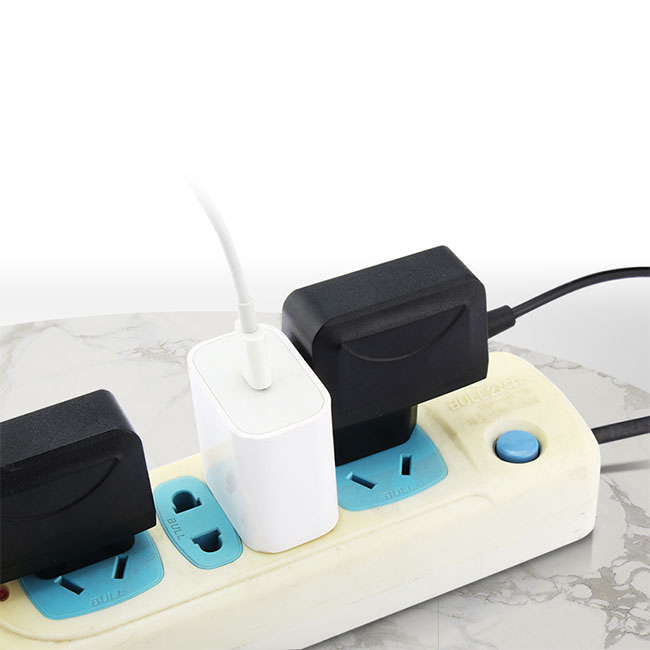
You cannot safely open the casing to clean internal components. Therefore, physical maintenance focuses entirely on the exterior environment. Smart positioning extends hardware lifespan significantly. Proper handling prevents unnecessary stress.
Thermal Management: Proper cooling requires consistent ambient airflow. You should provide a minimum of two to three inches of clearance around the power block. Never trap operating units behind dense furniture. Do not lock them inside sealed junction boxes unless you install active cooling fans. Trapped heat accelerates component failure exponentially. Heat acts as the absolute worst enemy of electronic longevity.
Cable Management Protocol: Proper wire handling prevents most mechanical failures. Audio professionals developed excellent methods to protect fragile cables. We can apply this same logic to our power blocks.
By alternating the twist direction for each loop, you prevent the cable from developing a permanent physical memory. It uncoils perfectly straight every time. Tight wrapping bends the wire past its minimum bend radius. It fractures the delicate copper strands inside the insulation. This creates hidden short circuits over time.
Environmental Limits: You must define safe operating parameters for your deployments. Standard indoor units operate safely between 0°C and 40°C. Exceeding these baseline temperatures voids warranty protections immediately. Warn your installation teams against moisture ingress. Industrial or outdoor settings require highly specialized equipment. Never deploy an indoor-rated unit outside unless it carries a certified high IP rating. Condensation ruins the internal circuitry instantly.
Long-term maintenance starts long before you even deploy the unit. You must verify the baseline capabilities carefully. Accurate specifications act as your first line of defense. Let us review the essential performance numbers.
Understanding the Output: Many users misunderstand basic power ratings completely. A true 10w 5v 2a power adapter delivers a constant 5 Volts accurately. It provides *up to* 2 Amps of current. The connected device pulls exactly the current it requires. The power supply never pushes 2 Amps forcefully into the hardware. This means running a low-power device on a higher-amp unit remains perfectly safe.
Essential Protection Circuitry: You must demand comprehensive internal safeguards from manufacturers. These features prevent catastrophic meltdowns effectively. Without proper protection, a sudden grid spike sends unregulated power directly into delicate microprocessors. The resulting damage destroys expensive motherboards instantly. We outline the non-negotiable protections below.
Protection Circuitry Impact Matrix
| Protection Type | Abbreviation | Function and Maintenance Impact |
|---|---|---|
| Over-Voltage Protection | OVP | Shuts down the unit if output voltage spikes abruptly. It protects the delicate end device from completely frying. |
| Over-Current Protection | OCP | Cuts power if the device attempts to draw more amps than rated. It prevents internal fires efficiently. |
| Short Circuit Protection | SCP | Halts operation entirely if the positive and negative wires touch. Essential for safe human handling and field deployment. |
Efficiency Ratings: High efficiency directly reduces ongoing maintenance burdens. You should carefully evaluate the DoE Level VI efficiency rating. The Department of Energy mandates this strict standard globally. A Level VI unit converts more AC wall power into usable DC power. It wastes far less energy as ambient heat. Lower heat generation keeps the internal temperature incredibly stable. This simple specification extends component longevity dramatically.
People frequently use these two terms interchangeably in casual conversation. Industry professionals know they perform very different electrical functions. Mismatching them guarantees hardware failure eventually. We must clearly distinguish between these two fundamental categories.
Defining the Terms: A standard DC power supply provides a rigid, constant voltage output. It delivers a flat 5V line continuously regardless of load changes. A battery charger operates dynamically. It manages highly specific charging profiles like trickle charging or float charging. It monitors internal battery voltage constantly. It adjusts the outgoing current automatically based on chemical feedback.
The Mismatch Risk: You risk severe danger if you confuse these units. A constant voltage unit cannot regulate a lithium battery safely. Direct connection pushes raw power into the chemical cells indiscriminately. Lithium cells require carefully stepped voltage increases. When a raw power supply hits a discharged lithium cell, the cell attempts to draw infinite current. The battery lacks an internal Battery Management System (BMS) in some raw setups. This triggers thermal runaway. The cells overheat in minutes. The power block usually burns out completely during the process.
Decision Matrix: Procurement teams need clear rules to prevent mistakes. Use the following simple matrix to confirm your technical requirements.
Following this basic matrix prevents the most common misapplication errors out in the field.
Preventative maintenance truly begins at the factory level. You cannot maintain a poorly built product effectively. Finding a transparent manufacturing partner eliminates most long-term headaches. Let us deeply examine the strict criteria for evaluating a capable 10W 5V power adapter supplier.
Verifiable Certifications: Do not simply trust printed logos on the plastic casing. Unscrupulous vendors print fake UL or CE marks constantly to deceive buyers. A highly reliable manufacturing partner provides comprehensive testing documents eagerly. You should request accessible UL, CE, FCC, or RoHS compliance certificates upfront. Verify the listed registration numbers in official government databases. Proper certifications guarantee baseline safety isolation.
Component Transparency: Ask your vendors about their supply chain directly. You must deeply understand the 10W 5V power adapter specifications running internally. Demand to know the exact source of their internal electrolytic capacitors. Ask about their control IC chips. High-grade Japanese or top-tier Taiwanese capacitors indicate a robust lifespan. Rubycon or Nippon Chemi-Con capacitors act as industry benchmarks for sheer longevity. Cheap, unknown capacitors dry out within a single year. These internal choices dictate the real-world operational lifespan entirely.
Warranty and RMA Rates: Trustworthy B2B vendors discuss hardware failures openly. Every electronic product has a predictable failure rate. Quality factories run continuous 24-hour burn-in tests under maximum load parameters. You should ask about their specific Return Merchandise Authorization (RMA) defect percentages. The acceptable industry standard defect rate should sit firmly below 0.5%. Legitimate vendors offer highly robust warranty terms. They base these warranties on actual MTBF testing data. Choose reliable partners who confidently back their hardware.
Maintaining reliable power requires strict environmental discipline continuously. We must treat these vital components carefully. Preventative maintenance acts as an exercise in heat reduction and proper physical cable handling. Follow the "over-under" wrapping technique faithfully. Give your hardware adequate space to breathe.
The final bottom line remains incredibly clear. No amount of careful handling can ever fix a poorly manufactured unit. Upfront investment in the correct safety specifications matters most. Working alongside a fully transparent supplier mitigates downstream device downtime entirely. Cheap components always cost your operation much more later.
We actively encourage you to audit your current deployment specifications today. Inspect your active units visually for frayed wires or excessive heat generation. Contact a qualified hardware supplier to source properly certified and reliable replacement hardware immediately.
A: No. Opening a sealed AC/DC adapter exposes you to high-voltage capacitors and compromises crucial safety isolation. The internal components retain dangerous electrical charges long after you unplug the unit. Attempting to solder broken internal wires destroys the required safety clearances entirely. Always replace a malfunctioning unit safely rather than attempting a highly dangerous physical repair.
A: Yes. The connected device will only draw the 2 Amps it specifically needs to operate. The power supply never forces excess current into the system artificially. In fact, the larger unit will likely run much cooler. It operates well below its maximum load capacity, potentially increasing its overall functional lifespan significantly.
A: A quality unit from a highly reputable supplier typically features an MTBF (Mean Time Between Failures) ranging between 30,000 to 50,000 hours. This impressive metric translates roughly to three to five years of continuous, reliable operation. Operating the unit safely in well-ventilated spaces at lower temperatures can push this functional lifespan even further.
A: This common physical phenomenon is universally known as "coil whine." It is caused by the high-frequency physical vibration of internal transformers or inductors during intense power conversion. While quiet humming often remains harmless, a sudden increase in audible volume indicates trouble. Loud whining usually points to failing internal capacitors and safely warrants immediate hardware replacement.