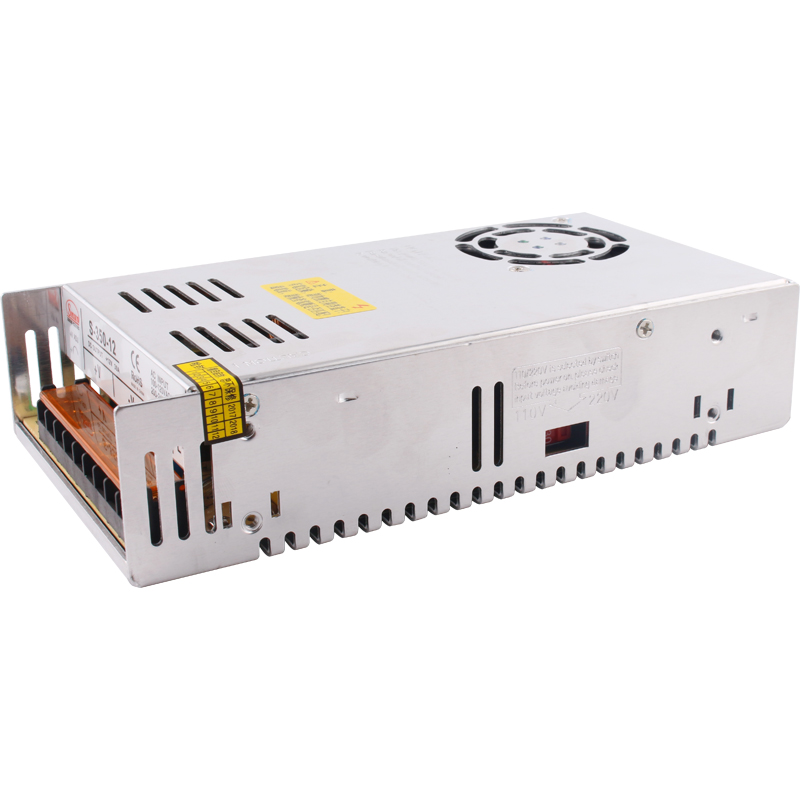
Off-the-shelf power modules cover about 80% of typical engineering needs. However, forcing a standard module into a highly complex or constrained system introduces hidden costs. It often compromises long-term reliability and creates severe design bottlenecks. At the critical decision stage, engineering and procurement teams face a tough choice. They must weigh the upfront Non-Recurring Engineering (NRE) costs of customization against the system-level benefits of an exact-fit solution. A slight mismatch in power specifications can ripple through an entire design.
This guide outlines the specific technical triggers, cost-benefit frameworks, and sourcing strategies you need. You will learn how to evaluate your current power architecture objectively. We will help you determine if a custom isolated DC DC converter is the best technical and commercial path for your upcoming project.
Key Takeaways
Volume vs. ROI: Customization is financially viable when standard component workarounds (like adding external EMI filters or multiple discrete converters) exceed the NRE and unit cost of a custom build.
Form Factor & Assembly: Custom modules can integrate embedded transformers and specific pinouts, radically simplifying PCB assembly and solving severe spatial constraints.
Compliance Certainty: High-isolation medical, aerospace, or heavy industrial applications often require bespoke creepage, clearance, and dielectric specifications that standard parts cannot guarantee.
Supplier Capabilities: Selecting an experienced custom manufacturer mitigates the risk of late-stage failures and ensures predictable prototyping and compliance testing.
The Limitations of Off-the-Shelf Power Modules
The "Workaround" Penalty
Engineers often default to standard catalogs when sourcing power components. When they cannot find a perfect match, they design workarounds. These compromises carry a massive penalty. You might compensate for an inadequate standard isolated type dc dc converter by adding external thermal management. You might build discrete isolation barriers. Often, teams add bulky external EMI shielding to pass compliance testing.
These additions quickly inflate the overall Bill of Materials (BOM). They also drastically expand the printed circuit board (PCB) footprint. A standard module appears cost-effective initially. However, the extra chokes, Y-capacitors, and heat sinks eat away at your budget. Furthermore, complex workarounds increase assembly time. More components mean a higher statistical chance of manufacturing defects. You spend more time troubleshooting and less time innovating.
Reliability Risks in Extreme Environments
Standard power modules work beautifully in climate-controlled server rooms. They struggle under extreme environmental stress. Heavy industrial, rail, or aerospace applications demand ruggedized power delivery. Standard potting compounds often degrade under harsh thermal cycling. Conformal coatings may peel away over time.
Thermal dissipation methods designed for benign environments fail in sealed enclosures. These limitations frequently lead to "late failures" in the field. Root cause analysis in ruggedized environments often points to mismatched thermal expansion coefficients. Solder joints crack. Insulation barriers break down. When you deploy a standard module outside its intended envelope, you gamble your product's reputation. A custom design addresses these exact failure modes from day one.
Lifecycle and Obsolescence
Many specialized products operate on 10-to-15-year lifecycles. Medical devices, defense electronics, and rail infrastructure fall into this category. Conversely, standard commercial power modules often face rapid obsolescence. Component manufacturers regularly retire old product lines. They want to push newer, cheaper architectures.
This misalignment creates massive headaches. If your power module goes obsolete in year three, you face a forced redesign. You must source a replacement, redesign your PCB, and repeat costly agency certifications. A custom design guarantees lifecycle control. You dictate when a redesign happens. You secure long-term component availability agreements. This strategic control prevents unexpected and expensive recertification cycles.
Technical Triggers for a Custom Isolated DC DC Converter
Non-Standard Voltages and Multi-Output Requirements
Standard power catalogs primarily offer 5V, 12V, 24V, and 48V outputs. What happens when your system requires unusual rail combinations? Your design might need +3.3V, -5V, and an isolated 60V simultaneously. Cascading multiple standard converters creates massive inefficiencies. Every conversion step wastes precious energy as heat.
Additionally, cascaded architectures often introduce grounding loop complexities. You might struggle with persistent noise issues. A complex system often benefits from a custom isolated dc dc converter 350w multi-output configuration. This bespoke approach consolidates your required outputs into a single magnetic core. It optimizes cross-regulation. It keeps overall efficiency high and dramatically simplifies your grounding scheme.
Extreme Spatial and Form Factor Constraints
Modern electronics continually push for higher power density. Sometimes your available PCB envelope remains strictly limited. A tall, standard module might block critical cooling airflow. It might interfere with a sleek product enclosure. You cannot compromise on aesthetics or aerodynamics just to fit a bulky power brick.
Custom modules solve severe spatial constraints. Engineers can integrate embedded planar transformers directly into the design. This integration radically reduces the vertical profile. You can specify exact pinouts to match your optimal routing paths. This flexibility eases overall PCB assembly. You put power exactly where it fits best.
Specialized Isolation and Safety Compliance
Basic standard modules usually provide 1.5kV or 3kV isolation limits. These ratings work fine for standard telecommunications. They fall dangerously short in critical medical or high-voltage applications. Specialized electronics demand specialized safety margins.
You may require custom creepage and clearance distances to satisfy strict agency rules. Medical devices demand reinforced insulation. You often need two Means of Patient Protection (2xMOPP) to pass IEC 60601-1. High-voltage electric vehicle systems demand ultra-low leakage currents. Standard parts simply cannot guarantee these bespoke safety metrics. A custom builder designs the isolation barrier specifically to meet or exceed your exact regulatory targets.
Severe Environmental & Thermal Demands
Standard converters safely operate between -40°C and +85°C. Countless field applications blast past this temperature range. Downhole oil drilling equipment operates in grueling 150°C environments. Arctic military gear regularly sees -55°C. You cannot rely on standard silicon or magnetics here.
You need custom thermal management. This involves specific baseplate designs engineered for maximum conduction cooling. You might require specialized epoxies for intense vibration resistance. Custom engineering accommodates unique potting compounds. These compounds protect sensitive internal components from explosive decompression or extreme shock.
Defining Your Isolated DC DC Converter Specifications
Establishing the Baseline
Before you approach a custom manufacturer, you must establish a strict baseline. Engineering teams must differentiate hard constraints from flexible parameters. Do not guess what you need. Document your requirements rigorously. Clear documentation prevents misunderstandings and accelerates the quoting process.
Here are a few common mistakes to avoid during this phase:
Requesting infinite flexibility across all voltage ranges.
Failing to account for worst-case thermal environments.
Ignoring the input source transient behaviors.
Core Specification Checklist
A successful custom design starts with a comprehensive data package. You must provide your supplier with the following critical details:
Input Voltage Range: Define the steady-state nominal input. Crucially, include all expected transient spikes and dropouts.
Output Parameters: Detail your exact output voltages. Specify your required current and power ratings. Clearly define your acceptable peak-to-peak ripple and noise limits.
Isolation & Safety: State your required isolation voltage in both kVDC and kVAC. List the specific safety agency standards your final product must pass (e.g., UL, EN, IEC).
Mechanical Details: Provide your maximum mechanical footprint. Supply your preferred pinout. Detail your intended cooling methodology (convection, conduction, or forced air).
Design Margin Management
We routinely see engineers over-specifying their power requirements. They might ask for double the necessary wattage "just to be safe." This habit inflates costs dramatically. You must carefully define your exact isolated DC DC converter specifications.
Proper design margin management prevents severe over-engineering. If you demand an extremely tight output regulation that your load does not actually need, the supplier must use more expensive components. By defining precise, realistic limits, you keep custom unit costs manageable. Collaborate with the manufacturer. Let them suggest the optimal margins based on their extensive topology experience.
Table 1: Hard Constraints vs. Flexible Parameters in Custom Design
Parameter Category
Examples
Impact on Custom Design
Hard Constraints
Safety standards (IEC 60601-1), Maximum height, Input voltage range
Non-negotiable. Drives the core topology and magnetic selection.
Allows supplier to optimize for cost, efficiency, and lead time.
Environmental Limits
Operating temperature range, Vibration profile
Dictates potting, baseplate material, and thermal management.
The ROI Framework: Is Customization Commercially Viable?
NRE Costs vs. Financial Break-Even Point
Customization requires upfront Non-Recurring Engineering (NRE) costs. These fees cover design time, prototype tooling, and initial compliance testing. You must calculate your financial break-even point to justify this expense. Compare the custom NRE against the discrete component costs of a workaround solution.
Add up the assembly time, intermediate testing phases, and extra PCB real estate consumed by your standard-part workaround. When those ongoing production costs outpace the one-time NRE, customization clearly wins. A bespoke module often reduces the final BOM significantly. It consolidates multiple discrete parts into one highly efficient unit.
Financial Viability Comparison Data
Cost Factor
Standard Module Workaround
Custom Isolated Module
Upfront NRE
$0
Moderate to High
External EMI Filters
Required (High Cost)
Integrated (Lower Cost)
Assembly Time
High (Multiple Components)
Low (Single Module)
PCB Space Required
Large Footprint
Optimized Footprint
Long-Term Unit Cost
Higher (Due to complex BOM)
Lower (Consolidated design)
Minimum Order Quantities (MOQ)
Production volume heavily dictates commercial viability. Custom designs require specific annual volume commitments. Factories must justify their tooling and specialized setup times. Be completely transparent about your production run sizes.
If you only need fifty units a year, a custom design might struggle to hit an attractive ROI. However, if your production scales into the thousands, the unit cost savings quickly eclipse the NRE. Discuss MOQ thresholds early in the negotiation process. Many suppliers offer tiered pricing based on realistic annual volume forecasts.
Time-to-Market Implications
Standard parts ship rapidly from major distributors. You can have them on your desk tomorrow. Custom prototypes take significantly longer. A custom build usually requires weeks or even months to finalize. You must factor this lead time into your broader product development cycle.
Acknowledge this reality early. Good planning prevents custom parts from delaying your product launch. Engage your custom supplier at the conceptual stage of your project. Do not wait until the mechanical enclosure is finalized. Early collaboration ensures the custom power module progresses in parallel with your main system design.
How to Evaluate an Isolated DC DC Converter Supplier
Demonstrated Engineering Expertise
Selecting the right partner makes or breaks a custom project. Look for demonstrated engineering expertise. A reliable vendor needs a strong, provable track record. They should have successfully solved similar topology and isolation challenges before.
A massive catalog of standard parts means nothing if they lack deep custom design experience. Ask for sanitized case studies. Review their past work in ruggedized or high-isolation environments. You want a team capable of advanced magnetic design, not just a factory that re-labels generic boards.
In-House Compliance Testing
Agency certifications represent the biggest hurdle in power electronics. Ask if the isolated DC DC converter supplier handles pre-compliance testing in-house. Do they own thermal chambers, EMI receivers, and high-voltage isolation testers?
In-house testing drastically reduces costly design iterations. If a prototype fails an emissions test, an in-house team spots it immediately. They tweak the design and retest the same day. If they must ship prototypes to an external lab, a simple failure costs you weeks of transit and scheduling delays.
Supply Chain Control
A brilliant design fails if you cannot build it reliably. Evaluate the supplier's component sourcing strategy. Custom designs should never rely on volatile, hard-to-source microchips. Ensure they avoid highly specialized silicon that frequently suffers from global shortages.
A top-tier supplier maintains excellent supply chain control. They use widely available, multi-sourced components wherever possible. They secure long-term agreements for critical magnetics. This stability protects your production line from sudden disruptions years down the road.
Prototyping to Production Pipeline
Assess the supplier's ability to scale smoothly. They must transition efficiently from initial 3D models to functional prototypes. Ask how they move a validated prototype into full-scale, automated manufacturing.
You want a seamless pipeline. The engineers who design the circuit must work closely with the production floor. This prevents "throw-it-over-the-wall" manufacturing issues. A cohesive pipeline ensures your final production units perform exactly like the golden prototype you approved months earlier.
Conclusion
Custom converters are not the right fit for every project. When a standard catalog part meets all your thermal, spatial, and regulatory needs seamlessly, use it. However, a custom unit becomes the superior choice when standard modules force unacceptable compromises on your system architecture.
Customization eliminates costly external BOM workarounds. It guarantees compliance in extreme environments and locks in your product lifecycle. By understanding the core technical triggers and evaluating the precise ROI break-even point, you protect your overall project margins.
Take action today by compiling your non-negotiable specifications into a clear document. Separate your hard constraints from your flexible desires. Sign a Non-Disclosure Agreement (NDA) with a qualified, experienced supplier. Initiate a feasibility study to request a clear NRE quotation phase. This structured approach guarantees a robust, long-term power solution.
FAQ
Q: What is the typical lead time for a custom isolated DC-DC converter prototype?
A: Realistic timelines usually range from 6 to 12 weeks. This depends heavily on topology complexity and whether you require custom magnetics. Simple footprint modifications take less time, while fully bespoke high-isolation designs require extensive testing and transformer winding adjustments.
Q: Does a custom design automatically mean I own the IP?
A: Typically, the supplier retains the base topology intellectual property (IP) unless you negotiate an exclusive NRE contract. This is standard industry practice. The supplier owns the core switching architecture, but they agree to manufacture the specific footprint exclusively for your company.
Q: Can a custom converter be certified to medical or industrial safety standards?
A: Yes, and this is often a primary reason for customization. The supplier will design specifically to pass strict standards like IEC 60601-1 or IEC 62368-1. Experienced custom manufacturers typically manage the entire agency certification process on your behalf.
Q: How do custom isolated DC-DC converters compare to non-isolated variants in terms of efficiency?
A: There is usually a slight efficiency penalty due to the isolation transformer's leakage inductance. However, custom magnetics optimization can significantly close this gap. A perfectly matched custom isolated module often outperforms poorly integrated off-the-shelf isolated workarounds.