Selecting the right power components serves as a critical risk-management decision for modern lighting infrastructure. Poor material choices in internal electronics or external housings consistently cause premature system failures. You simply cannot afford unexpected downtime in commercial or industrial environments. Procurement teams and engineers face a constant balancing act. They must carefully juggle initial Bill of Materials (BOM) costs while guaranteeing long-term reliability. We created this article to help you navigate these complex trade-offs effectively. You will discover a technical, vendor-neutral framework to evaluate casing, potting, and internal component materials. We will show you exactly how these physical choices directly impact driver performance and overall lifecycle returns. By understanding these material dynamics, you can confidently make smarter procurement decisions. Your ability to critically assess these components directly influences the stability of your entire lighting network.
Key Takeaways
- Thermal Management is Critical: Aluminum enclosures significantly outperform plastics in heat dissipation, directly extending the lifespan of internal electronics.
- Potting Compounds Matter: Silicone-based potting provides essential vibration resistance and thermal conductivity for harsh environments, though it increases unit weight and cost.
- Component Integrity Dictates Lifespan: The quality of internal electrolytic capacitors is the primary bottleneck for an LED driver’s Mean Time Between Failures (MTBF).
- Supplier Transparency is Non-Negotiable: A reliable LED driver power supply supplier will provide full material compliance documentation (UL, CE, RoHS) rather than just top-level performance claims.
The Business Impact of Material Selection on Driver Lifespan
Lighting systems often suffer from a harsh "weakest link" reality. A high-quality LED array easily lasts 50,000 hours under normal conditions. However, the entire fixture fails immediately if internal materials degrade. This thermal stress degradation makes your material selection incredibly important. You must carefully evaluate the entire system architecture.
You need to contrast upfront savings against future maintenance expenses. Lower-grade plastic housings might look attractive on initial purchasing spreadsheets. Generic capacitors offer tempting short-term budget relief. Yet, these cheap materials directly cause frequent field failures. You will spend heavily on replacement labor. You will also lose money during operational downtime. Imagine renting a scissor lift to replace a single burned-out driver in a high-bay warehouse. The maintenance labor quickly erases any initial component savings.
What defines a successful material specification? A robust design achieves three distinct performance criteria. First, it maintains stable thermal equilibrium under maximum electrical loads. Second, it guarantees consistent power delivery across diverse environmental conditions. Third, it ensures strict adherence to environmental compliance standards. You should always look for verified RoHS and REACH certifications. These certifications prove the manufacturer uses safe, non-hazardous chemical compounds.
Casing Materials: Evaluating Plastic vs. Aluminum Enclosures
Your external casing acts as the primary line of defense. It protects fragile internal components from harsh operational environments. Let us evaluate the two primary enclosure types used in the industry today.
Plastic (Polycarbonate/ABS) Housings
Plastic housings dominate the budget-friendly and consumer lighting markets. They utilize injection molding for rapid, cost-effective manufacturing.
- Best Use Case: You should use plastics for indoor, low-wattage, and cost-sensitive projects. They perform adequately in spaces equipped with ambient climate control. Examples include office ceiling panels and residential downlights.
- Limitations: Plastic exhibits exceptionally poor thermal conductivity. It acts as an insulator and traps heat inside the unit. Over time, plastic housings suffer from severe UV degradation. They turn yellow, become brittle, and easily crack when exposed to direct sunlight. You must avoid them in high-heat environments.
Aluminum and Metal-Alloy Housings
Metal enclosures provide true industrial-grade durability. They serve as a premium choice for demanding and unprotected environments.
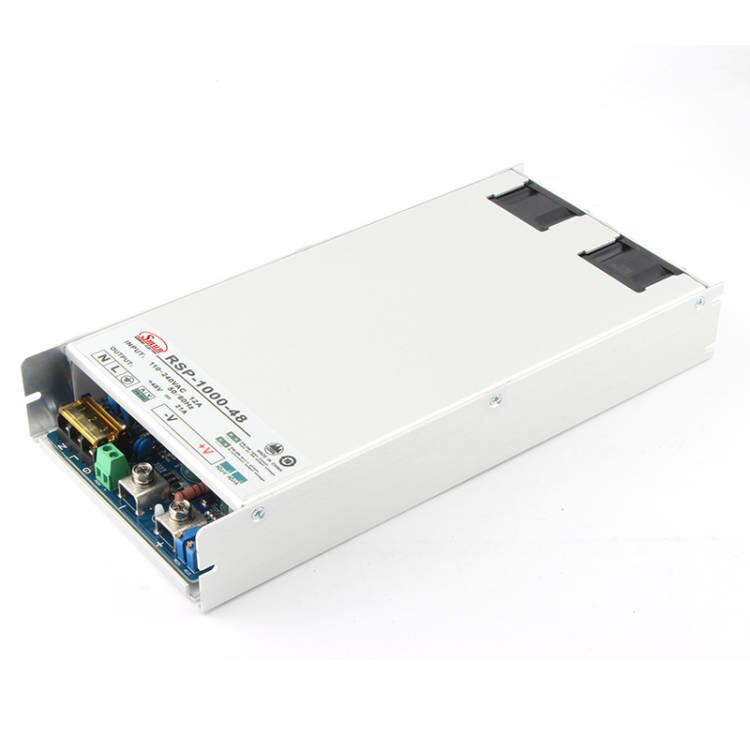
- Best Use Case: Metal casings are essential for high-wattage, outdoor, or heavy industrial applications. You absolutely need metal when targeting strict IP65+ ingress protection ratings.
- Advantages: Aluminum acts as an active heatsink. Extruded fins pull heat away from sensitive internal electronics. Furthermore, metal protects against electromagnetic interference (EMI). It also delivers superior resistance to severe physical impacts.
- Implementation Risk: Metal significantly increases the physical footprint. It adds considerable weight to your chosen LED driver power supply. You must account for this extra weight during fixture mounting and structural planning.
Casing Material Comparison Chart
| Feature | Plastic (Polycarbonate/ABS) | Aluminum Alloy |
| Thermal Conductivity | Poor (Traps internal heat) | Excellent (Acts as a heatsink) |
| Weight Profile | Highly lightweight | Noticeably heavier |
| EMI Shielding | Virtually none | High natural shielding |
| UV Resistance | Low (Prone to brittleness) | Extremely high |
| Ideal Environment | Indoor / Climate-controlled | Outdoor / Industrial settings |
Internal Materials: Potting Compounds and Component Quality
External enclosures only tell half the story. Internal materials determine how well a unit handles continuous, daily electrical stress.
The Role of Potting Materials (Silicone vs. Epoxy)
Potting materials fully encapsulate internal circuit boards. They protect fragile solder joints from physical shock and liquid moisture. Manufacturers pour these liquids into the casing, allowing them to cure completely.
Silicone potting delivers unmatched thermal stability. It remains highly flexible across vast temperature ranges. This permanent flexibility easily absorbs mechanical stress and thermal expansion. It actively prevents microscopic moisture ingress. We strongly recommend silicone for extreme, high-reliability needs. It displaces insulating air pockets perfectly.
Epoxy and polyurethane offer a more rigid, lower-cost alternative. However, these materials prove highly prone to micro-cracking over time. Extreme temperature fluctuations expand and contract the rigid epoxy structure. This thermal cycling fractures the compound, compromising internal waterproof protection entirely. You should avoid epoxy in environments prone to winter freezes.
Electrolytic Capacitors and PCB Materials
A power driver is only as reliable as its weakest internal capacitor. Engineers constantly monitor capacitor degradation.
High-temperature, name-brand electrolytic capacitors remain absolutely critical. Japanese-made capacitors rated for 105°C represent the industry gold standard. Capacitors contain a liquid electrolyte material. Heat forces this electrolyte to dry out gradually over time. This evaporation stands as the primary cause of hardware failure. The Arrhenius equation states capacitor lifespan halves for every 10°C temperature rise. Superior capacitor materials delay this drying process, doubling or tripling hardware longevity.
The printed circuit board (PCB) substrate must transfer heat efficiently. Copper thickness matters heavily for high-current paths. Premium FR4 board materials impact how effectively the board sheds heat to the outer casing. A high-quality led driver utilizes thick 2-ounce copper traces. These thicker traces drastically reduce electrical resistance and prevent localized hot spots.
Matching Material Choices to High-Demand Applications
You cannot apply a generic, one-size-fits-all approach to component selection. High-demand scenarios require highly specialized engineering materials.
Scalability & Load Demands
Material tolerances must scale non-linearly as wattage increases. A small 50W driver easily forgives minor thermal inefficiencies. A massive 500W driver will experience rapid thermal runaway under those exact same inefficiencies. You must mandate stricter material grades for higher electrical loads. The heat dissipation requirements compound rapidly.
High-Power Use Case
Let us examine the strict material requirements for heavy-duty applications. A perfect example involves specifying an adjustable pfc switching power supply 1000w.
Why does material selection matter so much here? At 1000W, active Power Factor Correction (PFC) components generate substantial, continuous heat. Standard plastic enclosures would melt or warp immediately under these loads. Aluminum housings combined with active cooling become absolutely mandatory. If the unit uses cooling fans, they must feature durable dual-ball bearing materials. Sleeve bearings degrade far too quickly. Alternatively, manufacturers must apply advanced thermal silicone potting to ensure survival without fans.
High-power hardware requires superior dielectric materials. These thick insulators actively prevent dangerous electrical arcing between high-voltage traces. Proper dielectric materials ensure strict compliance with UL Class 1 and Class 2 safety standards. They protect your facility from unexpected electrical fires.
How to Shortlist an LED Driver Power Supply Supplier Based on Material Transparency
Marketing brochures frequently exaggerate general performance claims. You must cut through the noise by demanding verifiable engineering data. A structured evaluation framework helps you separate premium manufacturers from low-tier assemblers.
Reviewing Specifications
You must scrutinize the provided LED driver power supply specifications carefully. Look beyond the basic wattage numbers.
- Look for clearly stated operating temperature ranges. Pay special attention to the maximum Tc (case temperature) test point.
- Verify the exact Mean Time Between Failures (MTBF) data. Check the testing conditions utilized, such as the rigorous MIL-HDBK-217F military standard.
- Check for independent IP (ingress protection) and IK (impact protection) laboratory test reports. Do not accept self-certified claims.
Actionable Next Steps
Take these practical steps before finalizing your procurement contracts.
- Demand complete Bill of Materials (BOM) transparency for critical internal components. You need to verify the exact brands of capacitors and controller ICs.
- Request physical sample units for your engineering team.
- Physically verify the internal potting density. You can weigh the unit to check for air voids or insufficient compound fills.
- Test casing heat dissipation using thermal imaging cameras under maximum electrical load.
Always complete these rigorous verifications before purchasing volume orders from any LED driver power supply supplier. Trusting unverified materials invites unnecessary operational risk.
Conclusion
Material options dictate ultimate systemic reliability. From external aluminum casings to internal silicone potting compounds, these choices determine project success. They decide whether a power unit meets expected lifecycle returns or causes early system failures. We strongly advise buyers to prioritize exceptional thermal management materials. Never sacrifice capacitor quality for marginal initial cost savings. The long-term maintenance risks far outweigh any short-term budget benefits.
We encourage you to review your current specification sheets today. Consult directly with your electrical engineers. Audit the precise material quality of your shortlisted drivers immediately. A proactive approach to component verification guarantees a stable, long-lasting lighting infrastructure.
FAQ
Q: How does potting material affect the thermal performance of an LED driver?
A: Potting materials like silicone displace insulating air pockets inside the driver, creating a thermal bridge that transfers heat from the PCB components directly to the external casing, significantly lowering internal operating temperatures.
Q: Why are aluminum enclosures specified for high-wattage drivers?
A: Aluminum provides superior thermal conductivity compared to plastic. For high-output units, the casing acts as a necessary heatsink to prevent thermal runaway.
Q: Do material choices impact the dimming performance of an LED driver?
A: Indirectly, yes. High-quality internal materials (like advanced silicon in ICs and stable capacitors) ensure a clean power output without flicker, especially at the low end of a dimming curve. Cheap components degrade faster, causing inconsistent dimming profiles over time.