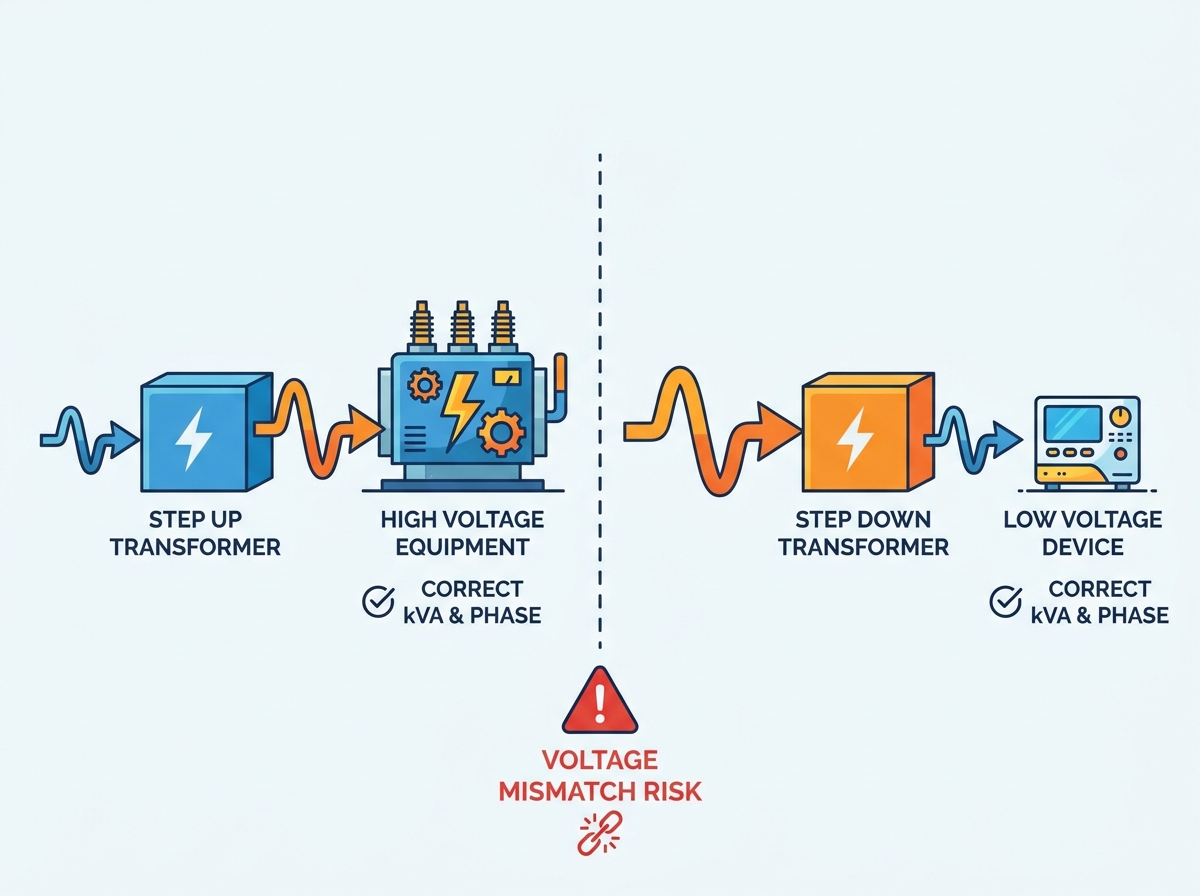
Operating industrial facilities requires a highly stable electrical distribution network. Sudden voltage fluctuations or mismatched power inputs can immediately disrupt your entire production line. Manufacturers simply cannot afford unexpected electrical failures in today's fiercely competitive landscape.
Voltage mismatch presents a critical operational risk extending far beyond a blown fuse. Severe equipment damage, rigorous compliance failures, and extended production downtime routinely stem from poorly specified power systems. Buying industrial electrical equipment demands much more than basic voltage matching. It requires a stringent evaluation of safety certifications, technical specifications, and supply chain dependability.
This comprehensive guide serves as a practical decision-making framework for facility managers and procurement officers. You will learn exactly how to define your power specifications and confidently vet prospective manufacturing partners. We will help you navigate complex industrial standards to ensure seamless operational integration.
Key Takeaways
Identifying the correct kVA rating and phase configuration is critical to preventing equipment failure and avoiding premature capital replacement.
The Fundamentals of Voltage Conversion
Electrical grids deliver power at specific standardized voltages. However, your specialized industrial machinery often requires different voltage levels to operate correctly. This discrepancy necessitates robust conversion solutions. Electrical transformers bridge this gap seamlessly. They adjust incoming power to match your exact equipment specifications. This process relies on a proven scientific principle called electromagnetic induction.
Inside the unit, two separate coils of wire wrap around a shared magnetic core. The primary coil receives the incoming electrical supply. The secondary coil connects directly to your machinery. As alternating current flows through the primary winding, it creates a fluctuating magnetic field. This field induces a corresponding voltage in the secondary winding. The ratio of wire turns between these two coils dictates the final output voltage.
We classify these devices based on their primary function. Some units increase the voltage for long-distance transmission or heavy-duty motors. Other units decrease the voltage for sensitive control panels or standard commercial outlets. Industrial environments typically handle alternating current (AC). However, specialized applications might require direct current (DC). In those instances, an ac dc transformer manages the complex conversion process. Accurate power modification ensures your equipment runs efficiently and safely.
Phases and Frequencies
Voltage represents only one piece of the electrical puzzle. You must also account for electrical phases and operating frequencies. Most commercial buildings utilize single-phase power for basic lighting and light-duty outlets. Industrial plants overwhelmingly rely on three-phase power. Three-phase systems deliver energy more continuously. This steady delivery powers large industrial motors without excessive vibration.
Furthermore, international equipment often operates at different frequencies. North America standardizes on 60 Hertz (Hz). Many European and Asian countries utilize 50 Hz. Transformers alter voltage, but they do not change the frequency. You must ensure your machinery can tolerate the local grid frequency. Ignoring this detail often leads to severe motor overheating.
Core Differences Between Step Up and Step Down Units
Understanding the fundamental differences between equipment types helps you make informed procurement decisions. Each configuration serves a specific operational purpose within your facility. Using the wrong unit guarantees catastrophic equipment failure.
Raising the Voltage Level
A step up transformer deliberately increases the incoming voltage. In this configuration, the secondary coil contains more wire turns than the primary coil. When voltage increases, the corresponding current decreases proportionally. This inverse relationship ensures the total power remains constant throughout the transfer.
Facilities often deploy these units when operating heavy European machinery in North America. For example, your plant might receive 208V power from the municipal grid. However, your new CNC machine requires 480V to run its spindle motors. You would install this specific unit to bridge the gap. They also play a vital role in renewable energy setups. Solar inverters generate low-voltage electricity. Step up units elevate this power for efficient grid integration.
Lowering the Voltage Level
Conversely, a step down transformer reduces incoming high voltages to safer, usable levels. Here, the primary coil contains more turns than the secondary coil. The voltage drops, while the available current increases. This setup represents the most common configuration in commercial buildings.
Industrial parks typically receive power at extremely high voltages, such as 4160V or 480V. Your standard office computers, facility lighting, and basic hand tools cannot accept this massive input. You must reduce the 480V supply down to standard 120V or 240V circuits. Facility managers install these units at strategic distribution points throughout the building.
Specialized and Scaled Solutions
Sometimes you need flexibility rather than massive industrial capacity. For example, testing imported equipment on a lab bench requires adaptable power. A basic voltage converter 110v 220v easily handles standard plug-in equipment for small-scale testing. While a portable home transformer works flawlessly for consumer electronics, industrial manufacturing demands rugged, hardwired, high-capacity enclosures.
Transformer Configuration Matrix
Technical Feature
Step Up Configuration
Step Down Configuration
Coil Turn Ratio
Secondary > Primary
Primary > Secondary
Voltage Output
Higher than input
Lower than input
Current Output
Lower than input
Higher than input
Common Application
Heavy machinery, solar grids
Facility lighting, control panels
Wire Gauge Size
Thicker on primary side
Thicker on secondary side
Typical Usage Scenarios
Manufacturing lines: Adapting local grid power to specialized automated robotics.
Medical facilities: Providing clean, isolated power to sensitive imaging machines.
Data centers: Managing massive power loads across extensive server racks.
Commercial HVAC: Powering large rooftop chiller units from standard building feeds.
Assessing Your Facility's Power Requirements
Accurate technical specification forms the foundation of reliable electrical procurement. Guessing your power requirements inevitably leads to system overloads or wasted capital. You must methodically evaluate your facility's specific constraints before contacting vendors. We strongly recommend collaborating closely with certified electrical engineers during this phase.
Calculating Required Load Capacity (kVA)
Transformer capacity uses kilovolt-amperes (kVA) as the standard measurement. You cannot simply select a unit based on physical size. You must calculate the total electrical load it will support. Adding up the wattage of all connected devices gives you the baseline requirement.
Follow these critical steps to determine your ideal kVA rating:
Audit all connected machinery: Review the manufacturer nameplates on every piece of equipment. Document the operating voltage and maximum current draw (amperage).
Calculate individual loads: Multiply the required voltage by the maximum amperage for each device. This gives you the apparent power in volt-amperes (VA).
Determine total system load: Sum the VA values of all devices sharing the circuit. Divide this final number by 1,000. This calculation yields your baseline kVA requirement.
Add a strict safety margin: Never size a unit for exact baseline capacity. Always add a 20% to 25% safety margin. This buffer handles sudden startup inrush currents effortlessly.
Account for future expansion: Consider adding another 10% capacity if you plan to expand your production line soon. Upgrading a transformer later disrupts production significantly.
Common Sizing Mistakes
Many facility managers improperly size their equipment by ignoring peak operating conditions. Motors require significantly more current during initial startup than during continuous operation. If you size the unit solely for running current, the initial surge will trip breakers or cause severe voltage drops. Furthermore, installing an excessively large unit wastes physical floor space and decreases overall electrical efficiency. Precision remains paramount.
Essential Compliance and Safety Standards
Industrial electrical equipment carries inherent physical risks. High voltages can cause fatal arcs, severe fires, and extensive property damage. Consequently, regulatory bodies strictly govern manufacturing and installation practices. You must ensure your specified equipment adheres to relevant industry standards. Non-compliant hardware voids facility insurance policies and triggers heavy regulatory fines.
Navigating Regulatory Certifications
Reputable manufacturers subject their products to rigorous independent testing. You should look for universally recognized certification marks on the equipment nameplate. In North America, Underwriters Laboratories (UL) sets the gold standard for electrical safety. A UL-listed device guarantees the manufacturer followed strict design and testing protocols.
The Institute of Electrical and Electronics Engineers (IEEE) also publishes comprehensive design guidelines. Standard IEEE C57 dictates rigorous testing procedures for distribution units. Compliance with IEEE C57 ensures the coils can withstand thermal stress and short-circuit faults. We highly recommend demanding documentation proving compliance with these specific benchmarks.
Enclosure Ratings for Extreme Environments
The physical casing surrounding the core components is just as important as the coils themselves. Industrial environments frequently expose equipment to harsh conditions. Dust, moisture, and corrosive chemicals rapidly degrade exposed electrical connections. The National Electrical Manufacturers Association (NEMA) categorizes enclosures based on their environmental resilience.
NEMA 1: Suitable strictly for clean, dry, indoor environments. They offer basic protection against accidental contact.
NEMA 3R: Designed for outdoor installations. They effectively repel rain, sleet, and external ice formation.
NEMA 4X: Engineered for highly corrosive environments. These watertight enclosures feature robust stainless steel construction, perfect for chemical processing plants.
NEMA 12: Built for typical indoor manufacturing spaces. They reliably block circulating dust, falling dirt, and dripping non-corrosive liquids.
Selecting the incorrect enclosure rating practically guarantees premature equipment failure. Always match the NEMA rating directly to the installation environment.
Key Criteria for Vetting a Manufacturing Partner
Sourcing critical electrical infrastructure requires looking beyond the initial purchase price. The reliability of your power network depends entirely on the quality of your chosen vendor. Partnering with a dedicated step up down transformer supplier requires methodical evaluation. You need a partner capable of delivering consistent quality, robust engineering support, and reliable logistics.
Evaluating Production and Testing Capabilities
You must scrutinize a supplier's internal quality control processes. A trustworthy manufacturer does not skip vital testing phases. Ask prospective vendors about their standard factory acceptance tests (FAT). They should routinely perform polarity checks, core loss measurements, and high-voltage withstand tests. Request sample test reports before finalizing any major procurement contracts.
Furthermore, examine their materials sourcing. High-grade copper windings conduct electricity far better than cheaper aluminum alternatives. Copper resists thermal expansion and lasts significantly longer in continuous-duty applications. Reliable suppliers transparently discuss their material choices and justify their engineering decisions.
Best Practices for Procurement
We recommend establishing a standardized evaluation checklist when interviewing suppliers. This systematic approach removes emotion from the purchasing decision. Consider the following crucial factors:
Engineering Support: Do they offer direct access to application engineers? You will likely need technical assistance when integrating complex units into existing grid architectures.
Customization Flexibility: Can they modify standard designs? Many industrial applications require custom footprint dimensions or specific termination locations to fit existing electrical rooms.
Warranty Terms: Analyze the specific language in their warranty documentation. A standard one-year warranty often proves insufficient for heavy industrial equipment. Look for partners offering multi-year guarantees on core components.
Lead Times: Supply chain disruptions severely impact facility upgrades. Verify their typical production lead times. Ask how they handle expedited emergency orders.
Post-Sale Service: Determine if they provide localized maintenance support. Prompt access to replacement parts drastically minimizes unplanned downtime during unexpected failures.
Do not hesitate to request references from other clients within your specific industry. A supplier experienced in commercial HVAC might struggle with the rigorous demands of heavy automotive manufacturing. Industry-specific experience matters immensely.
Conclusion
Safeguarding your industrial operations requires a strategic approach to power distribution. Unmatched voltages threaten your expensive machinery and disrupt critical production schedules. By carefully analyzing your precise kVA requirements and phase configurations, you prevent costly electrical failures. Always prioritize units that meet stringent UL, NEMA, and IEEE safety standards.
Procuring reliable electrical infrastructure demands thorough vendor evaluation. You must actively interrogate potential suppliers regarding their internal testing protocols, material quality, and engineering support capabilities. Next steps should include conducting a comprehensive audit of your current facility loads. Engage your internal engineering team to map out future expansion needs. Armed with accurate data, you can confidently approach suppliers and secure a solution that guarantees seamless, resilient operational performance.
FAQ
Q: Can a transformer operate in reverse?
A: Yes, many standard units can operate bi-directionally. You can technically wire a step-down unit in reverse to function as a step-up unit. However, we strongly discourage this practice for industrial applications. Reverse wiring alters the intended voltage compensation and frequently violates safety certifications. Always purchase a unit engineered specifically for your exact required direction.
Q: What is the difference between dry-type and liquid-filled units?
A: Dry-type units rely on ambient air circulation to dissipate internal heat. They are exceptionally safe and require minimal maintenance, making them ideal for indoor installations. Liquid-filled units submerge the coils in mineral oil for superior cooling. They handle massive electrical loads efficiently but pose environmental leak risks. Facilities typically install liquid-filled units outdoors.
Q: How do you determine the correct kVA size?
A: You must calculate the total load wattage of all connected devices. Divide this total by 1,000 to find the base kVA. We strongly recommend adding a 20% safety margin. This margin accommodates startup inrush currents effortlessly. It also leaves vital room for future equipment additions. Always consult equipment nameplates for accurate current draws.
Q: Why does my equipment overheat when connected to a new transformer?
A: Overheating usually points to a severe frequency mismatch or an undersized kVA rating. While the device corrects the voltage, it cannot alter the grid's operating frequency. Running 50Hz motors on a 60Hz supply causes dangerous heat accumulation. Alternatively, if the load exceeds the kVA capacity, the coils will overheat rapidly. Immediate shutdown is required.
Q: How often should we perform routine maintenance?
A: Dry-type units demand visual inspections and thermal scanning at least once a year. You must clear accumulated dust from the ventilation louvers to prevent overheating. Liquid-filled units require annual oil sampling to test for dissolved gases and moisture. Always tighten electrical terminal connections annually, as operational vibrations can loosen them over time.