
- All
- Product Name
- Product Keyword
- Product Model
- Product Summary
- Product Description
- Multi Field Search
Views: 0 Author: Site Editor Publish Time: 2026-05-22 Origin: Site


Subpar power supplies frequently cause catastrophic equipment failure. They trigger massive product recalls. They create immediate regulatory roadblocks. Bottom-of-funnel buyers face high stakes today. Moving from initial prototyping to a massive production run demands a major mindset shift. You must look far beyond simple unit pricing. Scalability becomes your primary concern. Rigorous quality control dictates long-term success. A reliable procurement process protects your entire brand reputation. Defective adapters can destroy expensive enterprise hardware. We designed this article to provide a definitive evaluation framework. It uses evidence-backed strategies. You will learn how to audit manufacturers effectively. We show you how to verify technical claims before spending capital. You can safely de-risk your global supply chain.
Match Specs to Scenarios: Generic adapters fail in high-stress environments. Specific industries (AI, medical, industrial) require tailored parameters like low ripple voltage (<50mV) or wide temperature tolerances.
Demand Raw Compliance Data: Do not accept verbal assurances for safety. Demand original, verifiable test reports for CE, UL, or IEC standards directly from third-party labs like SGS or TÜV.
Audit the QC Process: A reliable factory must demonstrate full-load burn-in tests, high-voltage insulation (Hi-pot) testing, and comprehensive thermal cycling on their own floor.
Implement a Hybrid Sourcing Strategy: Mitigate supply chain risks by combining bulk OEM manufacturing with strategic buffer stock to handle sudden market fluctuations.
Off-the-shelf specifications rarely suffice for enterprise-grade hardware. Consumer adapters simply lack the durability required for continuous operations. Generic power bricks fail spectacularly in high-stress environments. Defining a strict technical baseline remains critical. This baseline anchors any custom switching power supply design.
Ripple and Noise: Sensitive electronics demand exceptionally clean power. AI servers process massive datasets constantly. Telecom gear routes traffic without pause. These systems require a ripple voltage strictly below 50mV. High ripple causes data corruption over time. It degrades sensitive internal capacitor lifespans. We see many companies ignore this metric initially. They usually face high RMA rates later.
Energy Efficiency & Architecture: Assessing internal topology matters heavily. Gallium Nitride (GaN) components offer distinct advantages over traditional silicon-based designs. They deliver higher power density. They produce dramatically lower thermal output. Conversion efficiencies routinely exceed 97% using GaN technology. Traditional silicon struggles to surpass 90% efficiently. Less wasted heat means longer component life. It allows for smaller, sleeker device footprints.
Form Factor and Environment: You must evaluate structural configurations carefully. Options include wall-mount, desktop, or open-frame PCBA formats. Environmental durability holds equal importance. Industrial automation often requires IP67 ratings for dust and water resistance. Equipment deployed outdoors might need a -40°C to 85°C operating temperature range. A generic indoor adapter will freeze and crack in outdoor enclosures.
GaN vs. Traditional Silicon Power Designs | ||
Metric | Traditional Silicon | GaN (Gallium Nitride) |
|---|---|---|
Conversion Efficiency | 85% - 90% | 95% - 97%+ |
Thermal Output | Moderate to High | Very Low |
Power Density | Standard footprint | Up to 40% smaller footprint |
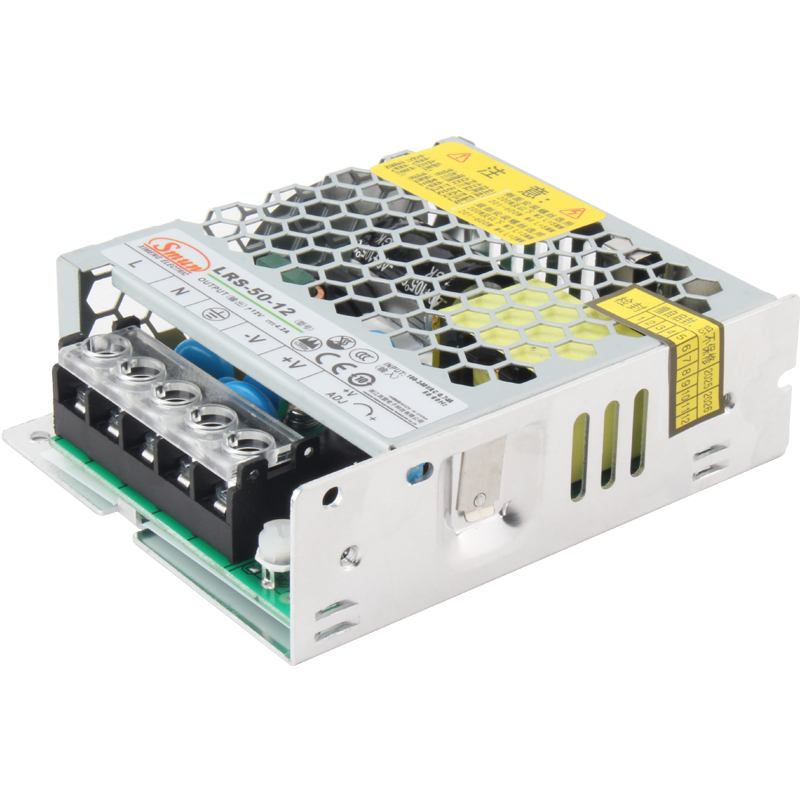
Regulatory access forms the hard baseline for hardware launches. Failing to meet regional standards halts customs clearance immediately. Ports will seize non-compliant shipments. It kills product launches and damages brand trust.
Different sectors demand highly specialized safety approvals. Medical devices require strict IEC 60601-1 compliance. This standard emphasizes ultra-low leakage current. It mandates multiple Means of Patient Protection (MOPP). It requires robust double insulation to prevent shocks. You cannot compromise on these parameters.
Consumer and industrial markets share similar baselines. North American markets demand UL certification. European markets require CE marks. Both regions strictly enforce energy efficiency protocols. You must meet DOE Level VI and EU CoC Tier 2 rules. These protocols severely limit standby power consumption.
IoT and telecom devices face unique hurdles. Uncontrolled electromagnetic emissions disrupt wireless networks. FCC and EMC testing prevent electromagnetic interference (EMI). Your OEM power supply must not interfere with surrounding electronics.
Always conduct the "Document Smell Test." Never trust a supplier's logo montage on their website. Procurement teams must verify original lab certificates directly. Demand documents from trusted labs like SGS or TÜV. Check the corresponding certificate number against the issuing laboratory's database. This actively prevents procurement from accepting expired claims. It roots out counterfeit compliance documents quickly.
A massive gap exists between a factory providing a perfect sample and manufacturing consistent units at scale. True risk mitigation involves auditing daily operations. You need to know how a facility builds and tests. Preparing for a bulk power supply order requires hard, documented evidence.
You need strict protocols to catch defective units before shipping.
Burn-In Testing: Insist on mandatory aging tests for all production batches. Reliable manufacturers run 100% full-load burn-in testing. These tests must last 4 to 8 hours minimum. Factories place units in heated rooms to simulate heavy usage. This process exposes early component failures effectively.
Surge and Hi-Pot Testing: Voltage spikes destroy unprotected electronics instantly. Ensure the manufacturer performs high-voltage insulation testing. This is known as Hi-pot testing in the industry. It verifies internal isolation barriers. Hi-pot testing prevents catastrophic field failures and electrical fires.
MTBF (Mean Time Between Failures): Evaluate the supplier's reliability testing methodology closely. Look at their Mean Time Between Failures (MTBF) calculations. Accelerated life testing guarantees 5-to-10-year product lifespans. We highly recommend asking for their comprehensive thermal cycling reports.
Common Mistake: Do not let a supplier skip burn-in testing to accelerate delivery. The short-term speed gain causes massive long-term RMA issues.
Global sourcing requires identifying exactly who you deal with. You must differentiate between genuine factory partners and pure trading companies. Hybrid factory-trade integrators offer another option. Pure traders often add hidden markups. Genuine factories provide strong engineering support. They sometimes lack polished communication skills. Hybrid integrators combine manufacturing assets with dedicated account management.
Component Sourcing: Does the factory maintain strategic buffer stocks? Look for facilities holding a 3-month supply of critical ICs. Guaranteeing inventory for parts like Texas Instruments chips prevents sudden line stoppages.
Geographic Redundancy: Geopolitical shifts disrupt single-country sourcing frequently. Assess manufacturers offering multi-region capabilities. Facilities split between China and Vietnam effectively hedge against logistical delays.
Demand visual proof of their capabilities today. Request a live video audit of their SMT lines. SMT stands for Surface Mount Technology. Verify their specific equipment lists during the call. Check the machine brands and precision tolerances. Examine their official business license thoroughly. It must explicitly state "Manufacturing" in its approved scope. Trading companies will only list "Sales" or "Distribution."
Moving from a vendor shortlist to a signed agreement requires careful structuring. You must align production schedules with tight legal guardrails.
Customization requires initial capital investments. Tooling costs typically range from $5,000 to $50,000. This depends heavily on custom mold complexity. Standard Minimum Order Quantities (MOQs) usually start between 500 and 1,000 units. You can often negotiate these thresholds downward. Presenting accurate annual volume forecasts helps significantly.
Do not jump straight into a massive switching power supply OEM bulk order blindly. Follow a strategic rollout plan.
Phase 1: Start with small-batch ODM or ready-to-ship units. This enables immediate market testing. It allows you to perform localized certification checks safely.
Phase 2: Transition toward a full bulk order framework. Implement Just-In-Time (JIT) delivery schedules. This minimizes your warehouse carrying costs greatly.
Protect your company through rigid vendor agreements. Embed explicit defect rate limits into the contract. We call these "zero-defect" clauses. They hold factories financially accountable for poor quality. Secure your intellectual property through robust non-disclosure agreements. Do this before sharing any internal schematics. Establish specific lead-time penalties. Standard lead times run 45 to 90 days. Delayed shipments disrupt your downstream assembly lines severely.
Evaluating an OEM power supply partner remains an exercise in strict risk management. It goes far beyond simple unit cost reduction. We strongly advise you to prioritize transparent manufacturers. Choose partners offering robust technical engineering support. Look for provable supply chain redundancy. Demand verifiable compliance data at every step. These factors matter significantly more than finding the absolute lowest price.
Next Steps:
Draft a precise technical specification sheet including environmental limits.
Request original lab certificates from your top vendor candidates.
Schedule a live video audit of their SMT and burn-in testing lines.
Finalize a phased rollout plan to validate quality before scaling.
A: Industry standards for high-grade electronics typically accept a defect rate between <0.1% and 0.5%. You must handle Return Merchandise Authorizations (RMAs) contractually. Embed specific clauses requiring the supplier to replace defective units free of charge or issue direct credit notes upon failure verification.
A: GaN (Gallium Nitride) involves higher upfront costs but provides long-term thermal and footprint benefits. It delivers superior conversion efficiency and significantly reduces heat output. Choose GaN for high-density modern applications. Traditional silicon remains a reliable, cost-effective choice for standard, low-wattage electronics.
A: Always verify certificates independently. Locate the certificate number on the document. Visit the issuing third-party laboratory's official online database, such as SGS or TÜV. Enter the number and confirm the exact factory name matches your supplier. This easily exposes counterfeit or expired compliance claims.
A: Yes. Standard B2B manufacturing practices often include mold fee rebates. Manufacturers typically refund these initial tooling costs once your cumulative orders hit a specific threshold, such as 50,000 units. You should negotiate and define this rebate threshold clearly within your initial manufacturing contract.