If you are designing or maintaining automation systems, telecom networks, or transit equipment, you already know how much relies on stable power. A high-quality DC-DC converter range is the unsung hero of these setups, keeping voltage regulation precise and protecting sensitive electronics from unexpected spikes. Sourcing these components directly from an industrial dc dc converter manufacturer china can slash your bill of materials (BOM) costs, but navigating the massive supplier landscape requires a strict, careful approach.
Cheap prices mean nothing if your power modules fail in the field. To get the best of both worlds—wholesale savings and rock-solid reliability—you must know how to separate top-tier factories from low-end assembly shops. This guide outlines the essential steps to identify, verify, and select a certified power solution partner that meets international industrial standards, helping you secure a reliable supply chain.
Why Sourcing from an Industrial DC DC Converter Manufacturer China Offers Strategic Advantages
If you want to optimize your production budget without sacrificing performance, sourcing directly from China offers distinct competitive benefits. It is not just about finding a lower price tag; it is about leveraging a highly specialized manufacturing ecosystem that can transform your product development cycle and secure your supply chain.
1. Direct-from-Factory Wholesale Pricing
Every middleman in your supply chain adds a markup. When you buy through regional distributors, you pay for their logistics, warehousing, and sales overhead. Sourcing directly from the factory floor eliminates these extra layers.
For global original equipment manufacturers (OEMs) and distributors, this direct access significantly lowers your bill of materials (BOM) cost. Because power modules represent a significant portion of an industrial system's hardware cost, even a minor percentage drop in unit prices can dramatically improve your overall project margins when scaling up to thousands of units.
2. Rapid Scaling via Regional Industrial Clusters
In China, electronics manufacturing relies heavily on geographic concentration. Most power supply production is clustered within Guangdong and Zhejiang provinces. These regions act as massive, self-sustaining ecosystems where component vendors, PCB fabricators, and testing facilities operate just miles apart.
This close proximity gives manufacturers a massive logistical advantage:
Instant Component Sourcing: Factories can secure raw materials, magnetic cores, and semiconductors within hours rather than weeks.
Accelerated Turnaround: Lead times for custom or high-volume orders are drastically reduced because there are no long-distance shipping delays between production steps.
Flexible Scalability: If your project demand suddenly spikes, these factories can quickly scale up production by tapping into local labor and material networks.
3. Comprehensive Product Portfolios
A mature local supply chain allows Chinese factories to offer an incredibly diverse range of products. Instead of working with multiple vendors for different power needs, you can often find your entire catalog with a single partner.
Because they have easy access to specialized raw materials and advanced engineering talent, these manufacturers can easily supply:
Standard buck and boost modules for everyday voltage regulation.
High-density, isolated converters for sensitive telecommunications gear.
Specialized high-voltage converters designed to withstand the harsh electrical environments of railway and DIN rail power supply range.
When looking at the global market, industry analyses of the top DC-DC converter suppliers for OEM applications often point to this deep integration of supply chains as a primary reason why Chinese manufacturing hubs remain dominant. By partnering with a factory that has these resources at its fingertips, you gain access to both standard catalog items and custom-engineered power solutions under one roof.
Key Takeaways
Chinese power suppliers provide direct-from-factory wholesale pricing, significantly lowering the bill of materials (BOM) cost for global distributors and OEMs.
Concentrated industrial clusters in Guangdong and Zhejiang provinces enable rapid scaling of production and faster turnaround times for high-volume orders.
Access to established supply chains allows manufacturers to offer extensive product portfolios, ranging from standard buck/boost modules to specialized high-voltage converters.
Key Quality Certifications to Verify When Selecting an Industrial DC DC Converter Manufacturer China
When you are sourcing power modules for heavy-duty applications, how do you separate high-tier factories from low-end assembly shops? The answer lies in their quality certifications. These documents are not just bureaucratic trophies; they are objective proof of a factory's operational discipline, manufacturing consistency, and engineering capabilities.
When evaluating your options, standard industry advice on choosing a switching power supply manufacturer in China highlights that verifying these certifications is the fastest way to weed out low-quality workshops from professional, enterprise-grade factories. Here are the three key certifications you must verify before signing a wholesale contract.
Certification
Primary Focus
Practical Benefit for Your Supply Chain
ISO 9001
Quality Management
Guarantees consistent manufacturing processes and strict batch-to-batch quality control.
ISO 14001
Environmental Management
Aligns production with eco-friendly standards, ensuring RoHS and lead-free compliance.
IATF 16949
Automotive-Grade Standards
Proves the factory can build components that survive extreme heat, cold, and heavy vibration.
ISO 9001: The Non-Negotiable Baseline
Think of ISO 9001 as your entry ticket. If an industrial dc dc converter manufacturer china does not hold an active ISO 9001 certification, you should drop them from your list immediately. This standard ensures that the factory has a structured quality management system in place. It means they document their processes, track raw material batches, and have a clear protocol for handling defective units. Without this, you run a high risk of receiving a perfect batch of samples, only to get a mass-production shipment plagued by random component failures.
ISO 14001: Environmental Standards and Compliance
ISO 14001 focuses on how a factory manages its environmental impact. While this might seem secondary to product performance, it directly affects your ability to sell products globally. Factories certified under ISO 14001 are highly likely to have established, compliant production lines for lead-free and RoHS (Restriction of Hazardous Substances) manufacturing. If your end products are destined for markets in Europe or North America, sourcing from an ISO 14001-compliant partner ensures you will not face customs delays or legal issues due to hazardous materials in your power converters.
IATF 16949: Automotive-Grade Reliability for Harsh Environments
If your DC-DC converters will operate in extreme environments—like railway systems, outdoor telecommunications towers, or heavy industrial machinery—you should look for a supplier with IATF 16949 certification. Originally designed for the automotive supply chain, this is one of the most rigorous quality standards in the electronics industry.
An IATF 16949 certified manufacturer has the specialized equipment and testing protocols required to build highly durable electronics. They routinely perform advanced stress testing, including:
Thermal Shock Testing: Rapidly cycling temperatures from sub-zero to extreme heat to ensure solder joints do not crack under thermal expansion.
Vibration and Shock Testing: Mimicking the constant physical shaking of automotive and heavy industrial machinery to verify physical durability.
Failure Mode and Effects Analysis (FMEA): Proactively identifying potential weak points in the circuit design before the manufacturing line even starts.
By verifying these three key credentials, you can confidently partner with a factory capable of delivering reliable, long-lasting power solutions for your wholesale needs.
Key Takeaways
ISO 9001 certification is the baseline requirement to ensure the factory implements a consistent quality management system across all production lines.
ISO 14001 compliance demonstrates that the manufacturer adheres to environmental standards, which often correlates with lead-free and RoHS-compliant product designs.
IATF 16949 certification indicates automotive-grade manufacturing capability, ensuring the supplier can meet the rigorous thermal and vibration stress testing required for harsh industrial environments.
Evaluating Technical Capabilities: Multi-Output Integration and Component Quality
Once you have verified a manufacturer's certifications, you need to dig into their actual engineering capabilities and the physical parts they use. A factory might have great quality control, but if their circuit designs are outdated or their components are cheap, your power systems will fail prematurely in the field.
Multi-Output Integration for Complex Systems
First, check if the manufacturer can design integrated multi-output isolated DC-DC converters. In complex industrial setups, you rarely need just one voltage. Your system might require 12V for cooling fans, 5V for logic circuits, and 3.3V for microcontrollers—all running off a single 24V or 48V input source.
Using multiple individual converters to get these voltages wastes space and increases your overall costs. A skilled industrial dc dc converter manufacturer china can design a single, integrated unit that handles all these outputs. For instance, they might combine a highly efficient isolated primary stage with a compact non-isolated buck DC-DC converters for each auxiliary voltage rail. This integrated approach reduces your system's overall footprint, simplifies your wiring, and improves high-efficiency transformer design.
Inspecting the Bill of Materials (BOM) for Capacitors
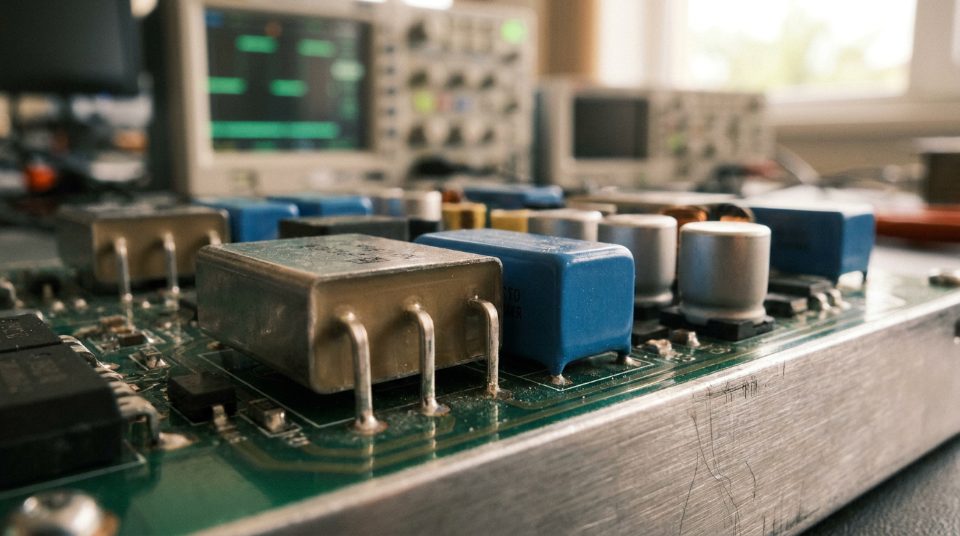
Next, you must look closely at the components inside the converter. The ultimate lifespan of a power converter is almost always decided by its capacitors—specifically the dc-link capacitors.
The Problem with Standard Capacitors: Many standard converters use cheap aluminum electrolytic capacitors. These contain a liquid electrolyte that slowly evaporates over time, especially when subjected to high heat and ripple currents. When the liquid dries out, the capacitor fails, and your entire system goes down.
The Solution: Ask the manufacturer for their Bill of Materials (BOM). Look for premium alternatives like solid polymer or film capacitors.
To help you compare your options, here is how these capacitor types stack up in industrial environments:
Capacitor Type
Lifespan under High Heat
Cost
Best Used For
Standard Aluminum Electrolytic
Short (liquid dries out over time)
Low
Budget-sensitive, low-temperature applications
Solid Polymer
Long (no liquid to dry out)
Moderate
High-temperature, high-reliability logic circuits
Film Capacitors
Extremely Long (highly self-healing)
Higher
High-voltage, heavy-duty industrial environments
By insisting on solid polymer or film capacitors, you can drastically extend the converter’s Mean Time Between Failures (MTBF) and keep your equipment running smoothly for years.
Key Takeaways
Verify if the manufacturer designs integrated multi-output DC-DC converters, which are essential for complex systems requiring multiple distinct DC output voltages from a single input source.
Analyze the bill of materials (BOM) for the dc-link capacitors; standard aluminum electrolytic capacitors are wear-prone components that limit the overall lifespan of the converter system.
Inquire whether the manufacturer offers premium component alternatives, such as solid polymer or film capacitors, to extend the mean time between failures (MTBF) in high-temperature applications.
Step-by-Step Sourcing Process and Risk Mitigation for Wholesale Buyers
How do you protect your business when buying critical power components in bulk? When dealing with an industrial dc dc converter manufacturer china, you cannot rely on promises alone. You need a bulletproof sourcing process to filter out low-quality products before they ever reach your assembly line.
To minimize your risks and secure high-performing power modules, follow these practical steps during your sourcing journey:
Request and Abuse Sample Units: Before you sign any bulk procurement agreements, ask for sample units so you can conduct in-house testing. Do not just check if they turn on; push them to their absolute limits. Run the converters under maximum load and subject them to extreme thermal conditions in a test chamber. If a component is going to fail, you want it to happen in your lab, not in your customer's machinery.
Define Strict Contractual Boundaries: Do not leave quality standards up to interpretation. Your sourcing contract must clearly define what constitutes a product failure. Specify your acceptable defect rates using precise metrics, such as target Parts Per Million (PPM) levels. Additionally, write down clear, step-by-step procedures for handling batch failures, including who covers shipping costs and the timeline for sending replacements.
Confirm Factory-Level Testing Protocols: A reliable manufacturer must catch defects before the products leave their floor. Verify that the factory performs 100% full-load burn-in testing to weed out "infant mortality" defects—components that fail during their first few hours of operation. You should also ensure they use Automated Optical Inspection (AOI) to scan every circuit board for soldering errors that human inspectors might miss.
By taking these precautions, you shift the risk back to the manufacturer and ensure that only the most durable, reliable power converters make it into your final products.
Key Takeaways
Request sample units for in-house testing under maximum load and extreme thermal conditions before signing any bulk procurement agreements.
Define strict failure conditions in the sourcing contract, specifying acceptable defect rates (such as target PPM levels) and clear procedures for handling batch failures.
Confirm that the factory performs 100% full-load burn-in testing and Automated Optical Inspection (AOI) on the production floor to prevent infant mortality defects in shipped units.
Conclusion
Transitioning to direct factory sourcing is highly effective if your project demands high-volume production and you have the resources to perform inbound quality control. To make this strategy work, your next step is to balance competitive pricing with a strict verification of ISO 9001 and IATF 16949 certifications. Do not cut corners on the bill of materials; a careful technical evaluation of critical components, especially the dc-link capacitors, is what prevents premature system failures once your products are out in the field.
Before signing a long-term contract, establish clear quality benchmarks and testing protocols during the sampling phase. This upfront effort ensures a reliable, predictable partnership with your chosen industrial dc dc converter manufacturer china. Start by requesting a small test batch of samples to verify their performance under real-world thermal stress.
FAQ
What should I do if a manufacturer cannot provide IATF 16949 certification? If your application is for standard industrial automation rather than automotive systems, an ISO 9001 certification is often sufficient. However, you should compensate for the lack of IATF 16949 by demanding more rigorous, documented burn-in testing reports from the factory floor to ensure reliability.
How do I verify the authenticity of a factory's ISO certificates? Always ask for the certificate registration number and the name of the issuing registrar. You can verify these details directly on the official website of the national accreditation body (such as CNAS in China) or through the IAF (International Accreditation Forum) CertSearch database.
How do factories typically handle customization or NRE fees for non-standard voltage ranges? Most established suppliers will waive non-recurring engineering (NRE) fees if your projected annual order volume meets their minimum threshold. For smaller initial batches, you will likely pay an upfront design fee, which is often refunded once your cumulative orders reach a specified quantity. Always clarify this refund structure in your initial technical agreement to avoid unexpected development costs.
Who is responsible for obtaining and paying for safety certifications like UL 62368-1 on custom designs? While standard off-the-shelf modules usually come pre-certified, custom designs require new testing. You can negotiate with the factory to split the certification costs, or have them manage the testing process locally in China, which is generally more cost-effective. Ensure the final certificate lists your company as the co-licensee or applicant so you maintain full control over the market compliance of your end product.
What are the typical minimum order quantities (MOQs) and lead times for wholesale industrial-grade converters? Standard modules usually require an MOQ of 100 to 500 units, whereas fully customized power solutions might demand 1,000 units or more. Lead times generally range from 4 to 8 weeks for standard production runs, though this can extend if specialized components like high-grade dc-link capacitors are on backorder. Working with an experienced industrial dc dc converter manufacturer china often helps shorten these lead times because they maintain safety stock of common raw materials.