If you are designing power systems for modern automation, railway systems, or medical devices, you already know that stable power conversion is non-negotiable. Harsh environments and voltage spikes can easily ruin sensitive electronics if your power components fail. Sourcing your components from an industrial dc dc converter manufacturer china can give you a major edge in both production scale and cost savings, but finding the right partner is often easier said than done.
With so many suppliers claiming to offer top-tier products, you need a reliable way to separate the true industry leaders from the low-end assembly shops. According to the DC-DC converter range resource, navigating this massive marketplace requires a strict evaluation process to ensure you do not end up with high failure rates in the field.
To make your sourcing journey easier, this guide outlines 10 critical criteria you should use to evaluate potential partners. By focusing on these technical and operational benchmarks, you can confidently secure a stable, high-quality supply of converters for your long-term project needs.
Evaluating Technical Capabilities of an Industrial DC DC Converter Manufacturer China
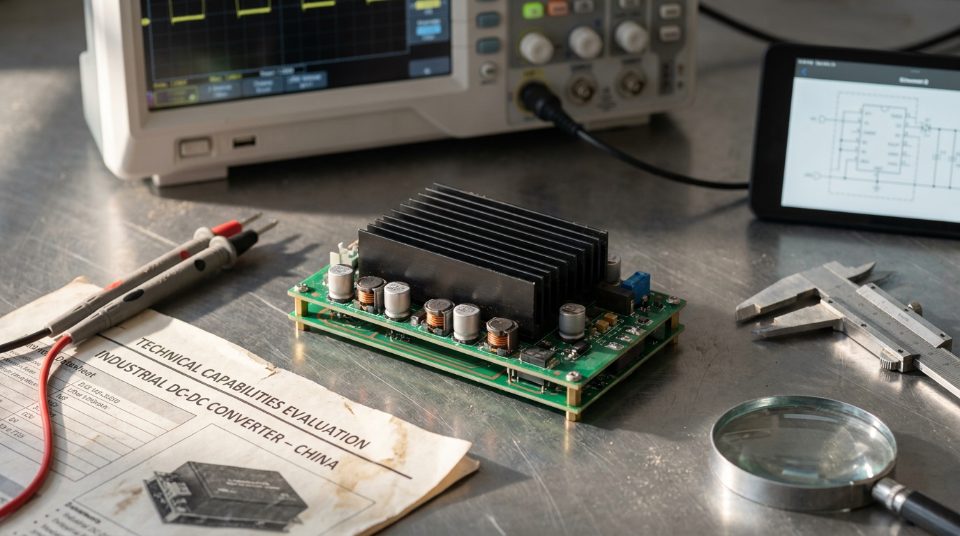
How do you know if an industrial dc dc converter manufacturer china can actually deliver on their promises, or if they are just putting a shiny label on cheap parts? To find out, you have to look past the marketing brochures and dig deep into their actual engineering capabilities. Evaluating a supplier's technical strength comes down to three main pillars: how well their products handle messy input voltages, how they manage heat, and how they protect your systems when things go wrong.
Let’s break down these three technical criteria so you know exactly what to ask their engineering team during your evaluation.
Criterion 1: Input Voltage Range and Stability
In a quiet office, power is steady. But on a factory floor, in a railway car, or near heavy machinery, voltage fluctuates constantly. When giant motors start up, they can drag the voltage down or cause massive spikes. Your converter must handle these swings without shutting down or burning out.
When you evaluate a manufacturer, look at their input voltage ratios:
2:1 Input Range: This is standard. For example, a 24V to 12V step-down converter might accept anywhere from 18V to 36V. It works well for stable systems.
4:1 Input Range: This is much wider. A 24V nominal unit can handle 9V to 36V. This is great for battery-powered systems where voltage drops as the battery drains.
8:1 Ultra-Wide Input Range: This is the gold standard for harsh environments. A single 12V/24V to 5V buck converter might accept anything from 9V all the way up to 75V.
If a supplier can reliably design 4:1 or 8:1 ultra-wide input converters, it shows they have advanced control loop design skills. It means they use high-quality components that can withstand wide electrical swings without losing stability.
Criterion 2: Thermal Management and Packaging Options
Power conversion always generates heat. If a converter gets too hot, its lifespan drops fast. That is why you need to look at how a manufacturer packages their units and manages thermal energy.
First, check if they offer the right package types for your specific board design:
SIP (Single In-line Package) & DIP (Dual In-line Package): Small, pin-through-hole styles that save board space but are usually limited to lower power levels.
SMD (Surface Mount Device): Great for automated assembly lines where machines place components directly onto the board.
Half-Brick / Quarter-Brick: Larger, robust modules designed for high-power applications. They often feature metal baseplates to help conduct heat away.
Second, ask about their thermal design. Do they use advanced potting materials like high-grade silicone to help transfer heat away from internal parts? Do they provide clear "derating curves" (charts showing how much power the converter can safely output at high temperatures)? A reliable manufacturer will design products that run cool even when the surrounding environment hits extreme temperatures like -40°C or +85°C.
Criterion 3: Electrical Protection and Conversion Efficiency
A great converter does not just change voltage—it acts as a shield for your expensive downstream electronics. You need to make sure the supplier builds robust protective features directly into their circuitry.
At a minimum, the converters should include:
Short-Circuit Protection (SCP): Instantly shuts down or limits current if a short occurs, preventing fires.
Over-Current Protection (OCP): Keeps the converter from drawing too much power and damaging itself.
Over-Voltage Protection (OVP): Clamps down on voltage spikes to protect your sensitive microchips.
Alongside protection, pay close attention to conversion efficiency. According to the industry overview in the top DC-DC converter suppliers for OEM applications, top-performing suppliers consistently design converters with efficiency ratings above 85% to 90%.
Why does efficiency matter so much? If a converter is only 75% efficient, it means 25% of the power going in is wasted as pure heat. high-efficiency transformer design means less wasted power, less heat to dissipate, and a much longer lifespan for your entire system.
Key Takeaways
Criterion 1 (Input Voltage Range): Ability to handle wide input ranges (e.g., 2:1, 4:1, or 8:1 ultra-wide inputs) to cope with voltage fluctuations in harsh industrial environments.
Criterion 2 (Thermal Management and Packaging): Availability of diverse package types (SMD, SIP, DIP, half-brick) and advanced thermal designs to ensure reliable operation under extreme temperatures.
Criterion 3 (Electrical Protection and Efficiency): Built-in safety features including short-circuit, over-current, and over-voltage protections, coupled with high conversion efficiency to reduce power dissipation.
Quality Certifications and Industry-Specific Standards
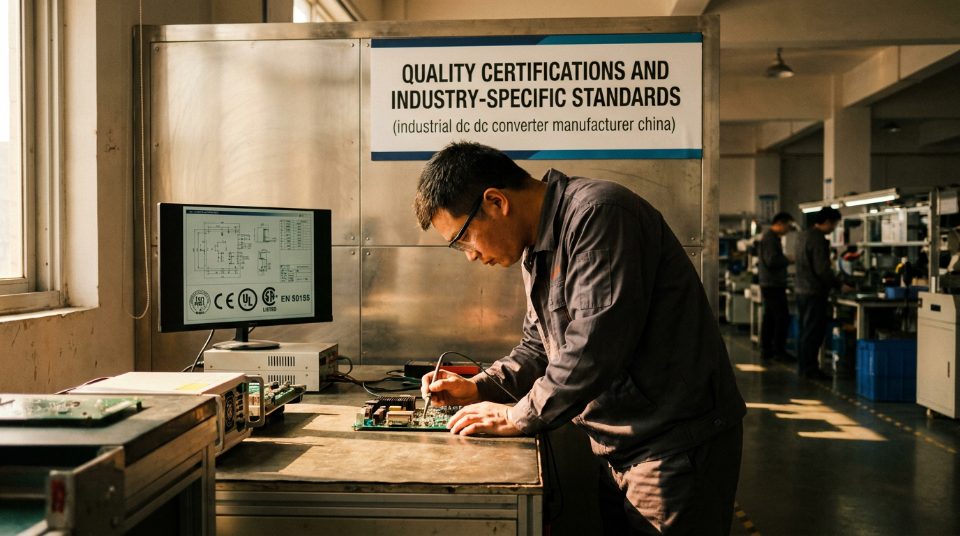
When you are sourcing power components, how do you know a supplier's products are actually safe and reliable? The quick answer is to look at their certifications. While a factory might promise top-tier performance, official quality standards and industry-specific compliance certificates are the only real proof that their converters can handle your specific operating conditions.
Criterion 4: International Quality Standards
Before looking at specialized features, you must check the foundational quality systems of any industrial dc dc converter manufacturer china. At a bare minimum, your supplier should hold active ISO 9001 and ISO 14001 certifications.
ISO 9001 (Quality Management): This certification ensures that the factory has a repeatable manufacturing process. It guarantees that the 10,000th converter off the assembly line performs exactly like the first prototype you tested. Without this, you risk dealing with high defect rates and inconsistent batch quality.
ISO 14001 (Environmental Management): Beyond green initiatives, this certification is a practical necessity. Factories that fail to meet environmental standards face sudden, government-mandated shutdowns. Partnering with an ISO 14001-compliant manufacturer helps protect your supply chain from unexpected production halts.
As highlighted in the industry guide on choosing a switching power supply manufacturer in China, you should always ask for the registration numbers of these certificates and verify them on official accreditation databases to ensure they are current and valid.
Criterion 5: Sector-Specific Compliance
Standard industrial ratings are not enough if you are designing systems for highly regulated fields like transit or healthcare. Your application dictates the specialized certificates your supplier must have.
Railway Systems (EN 50155): Rail environments are incredibly harsh. Converters used on trains must withstand constant vibration, physical shock, and rapid temperature fluctuations. An EN 50155-certified converter has been rigorously tested to survive these exact conditions without failing.
Medical Equipment (IEC/EN 60601-1): Patient safety is non-negotiable. Medical-grade converters must comply with IEC/EN 60601-1, which outlines strict safety and performance requirements to prevent electrical shocks to patients and healthcare operators.
Criterion 6: Isolation and High-Voltage Safety
Isolation is the physical and electrical separation between the input and output stages of a converter. It acts as a safety barrier to block high voltage from damaging sensitive low-voltage components or injuring users.
For demanding applications, you need a manufacturer capable of designing high-isolation barriers. Look for suppliers that offer isolation ratings of up to 3KVAC or even 4KVAC. This level of protection is crucial for:
Medical Applications: Ensuring zero leakage current reaches the patient.
IGBT Gate Drivers: Insulated-Gate Bipolar Transistors (IGBTs) switch high voltages at rapid speeds. High-isolation converters prevent high-voltage spikes on the power side from feeding back into and destroying your delicate control circuitry.
Key Takeaways
Criterion 4 (International Quality Standards): Possession of core manufacturing certifications such as ISO 9001 and ISO 14001 to guarantee process consistency and quality control.
Criterion 5 (Sector-Specific Compliance): Compliance with specialized industry certificates, such as EN 50155 for railway systems and IEC/EN 60601-1 for medical equipment safety.
Criterion 6 (Isolation and High-Voltage Safety): Capability to design high-isolation barriers (up to 3KVAC or 4KVAC) required for sensitive medical applications and IGBT gate drivers.
Supply Chain Reliability and Geographic Sourcing Advantages
How do you make sure your chosen supplier can actually deliver your power modules on time without unexpected delays? The secret lies in looking at where they are located and how they manage their factory floor. When you are searching for an industrial dc dc converter manufacturer china, understanding geographic sourcing and production capacity will save you from major supply chain headaches down the road.
Criterion 7: Geographic Sourcing and Directories
China is vast, but its electronics manufacturing is concentrated in specific regions. Using regional industry directories to filter suppliers by province is a smart way to streamline your logistics.
Guangdong Province: Known as a global electronics hub, sourcing from cities like Shenzhen or Guangzhou gives you access to a massive component ecosystem.
Fujian Province: Cities like Xiamen host top-tier manufacturers with excellent port infrastructure, making international shipping highly efficient.
By targeting these provinces, you can easily plan in-person factory audits and benefit from established local supply chains. When component suppliers are just down the street from your manufacturer, production moves much faster.
Criterion 8: Production Capacity and Lead Times
A great product design is useless if the factory cannot deliver your orders on time. You need to assess the manufacturer's actual production scale and how they handle global supply chain disruptions. Ask them about their raw material inventory buffers. For instance, whether you are buying high-isolation modules or a standard non-isolated buck DC-DC converters, checking their stock of magnetic cores and semiconductor chips is vital.
A reliable partner should have:
Automated SMT (Surface Mount Technology) assembly lines to ensure consistent quality at high volumes.
At least a two-to-three-month buffer of critical raw materials to protect your orders from sudden market shortages.
Clear, guaranteed lead times and a proven track record of maintaining them, even when global shipping routes get congested.
Key Takeaways
Criterion 7 (Geographic Sourcing and Directories): Utilization of regional industry directories to filter suppliers by provinces (e.g., Fujian, Guangdong) to optimize logistics, component sourcing, and factory audits.
Criterion 8 (Production Capacity and Lead Times): Assessment of the manufacturer's manufacturing scale, raw material inventory buffers, and ability to maintain stable lead times during global supply chain disruptions.
Steps to Audit and Partner with an Industrial DC DC Converter Manufacturer China
When you are ready to choose an industrial dc dc converter manufacturer china, you cannot just rely on a shiny PDF catalog. You need a hands-on strategy to separate the high-quality factories from the middlemen. Transitioning from a shortlist to a solid partnership requires checking their custom design capabilities, benchmarking them against industry leaders, and running a strict verification process.
Criterion 9: Customization and Engineering Support (OEM/ODM)
Standard, off-the-shelf converters do not always fit your specific project. You might need a unique pin configuration, a custom output voltage, or extra protection against electromagnetic interference (EMI).
A top-tier manufacturer must offer strong R&D support for custom modifications (OEM/ODM). When evaluating their engineering team, look for:
Direct communication: You should be able to speak directly with their design engineers, not just sales representatives.
Quick prototyping: The factory should be able to turn around modified samples within a few weeks.
Design flexibility: They should easily adapt standard converters to your unique application requirements without demanding massive minimum order quantities.
Criterion 10: Proven Track Record and Industry Footprint
How do you know if a supplier is truly ready for demanding projects? You benchmark them against established market leaders.
For example, look at YDS (Yuan Dean Scientific), a highly respected manufacturer based in Xiamen. YDS offers versatile converter solutions across highly regulated sectors, including industrial automation, medical equipment, railway systems, and IGBT gate drivers. If your potential partner cannot demonstrate a similar industry footprint or match the versatility of a benchmark like YDS, they may struggle to meet your long-term quality expectations.
The Verification Process: From Audit to Sample Testing
Never place a large production order based on promises alone. Use this three-step verification process to confirm a supplier's technical claims:
Physical Factory Audits: Visit the factory in person, or hire a local third-party inspection service. Verify that they have dedicated testing labs and automated assembly lines.
Third-Party Test Reports: Ask for official, independent test reports (such as CE, UL, or TÜV). This proves their products actually meet international safety and performance standards.
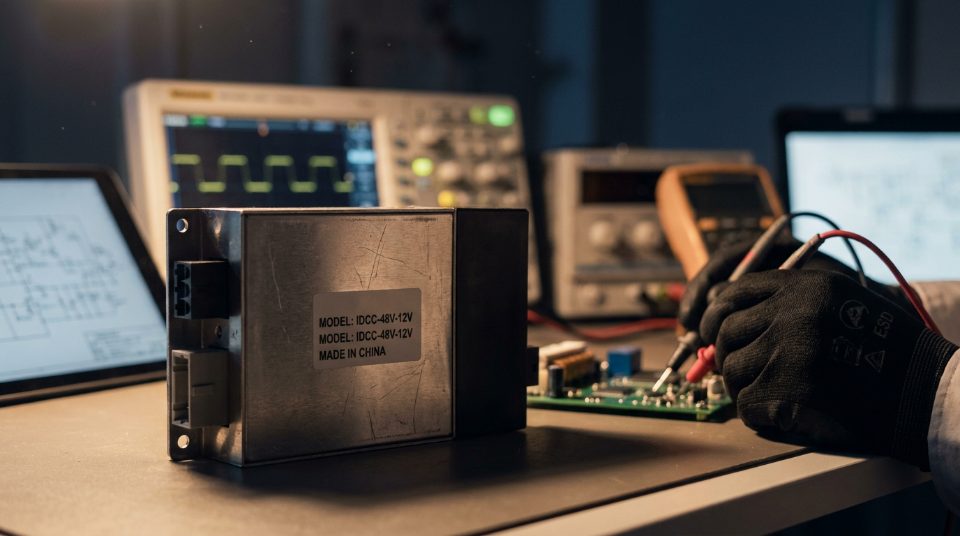
Initial Sample Evaluation: Order a small batch of samples and test them in your own lab. Put them under thermal stress and electrical overloads to see how they perform in real-world conditions before committing to mass production.
Key Takeaways
Criterion 9 (Customization and Engineering Support): Availability of strong R&D support for custom modifications (ODM/OEM) to adapt standard converters to unique application requirements.
Criterion 10 (Proven Track Record and Industry Footprint): Benchmarking suppliers against established players like YDS (based in Xiamen), which offers versatile converter solutions across industrial, medical, railway, and IGBT sectors.
Verification Process: Utilizing physical factory audits, third-party test reports, and initial sample evaluation to verify the supplier's actual technical claims before mass production.
Conclusion
How do you turn this guide into real-world success? Your next step is to find the right balance between technical performance, industry compliance, and supply chain reliability. No single factor should be prioritized at the expense of another. A cheap converter that fails in the field will cost you far more in repairs and downtime than a high-quality, certified component.
To streamline your search for an industrial dc dc converter manufacturer china partner, start by using geographic directories to target key manufacturing hubs like Fujian or Guangdong. Use established industry leaders like YDS (based in Xiamen) as your benchmark for quality, customization, and sector-specific certifications. By measuring potential vendors against these top-tier standards, you can quickly filter out low-quality options.
Moving forward, implement the structured 10-point evaluation framework during your initial sourcing phase. Requesting sample units, auditing factories, and verifying third-party test reports will protect your equipment from unexpected power failures and keep your operations running safely for years to come.
FAQ
When partnering with an industrial dc dc converter manufacturer china supplier, how do you ensure that mass-produced units maintain the same quality as the initial samples?
To prevent "spec drift" in mass production, you should request a strictly locked Bill of Materials (BOM) agreement and ask for outgoing quality control (OQC) reports with every batch. Setting up your own incoming inspection tests for key parameters like efficiency and isolation voltage is also one of the best practices to keep your supplier accountable over the long term.
How do you verify that a manufacturer is using genuine, high-grade internal components rather than cheap counterfeits?
You should ask the supplier to provide certificate of conformance (CoC) documents and traceability sheets for critical parts like power MOSFETs, control ICs, and high-temperature capacitors. Reliable partners will openly share their component sourcing channels and prove they buy directly from authorized global distributors.
What is the best way to handle intellectual property (IP) protection during custom OEM/ODM projects?
Before sharing any proprietary schematics, you must sign a bilingual Non-Disclosure, Non-Use, and Non-Circumvention (NNN) agreement governed by Chinese courts. Additionally, keeping the most sensitive parts of your design—such as proprietary firmware programming—in-house is one of the most effective protection strategies you can use.